
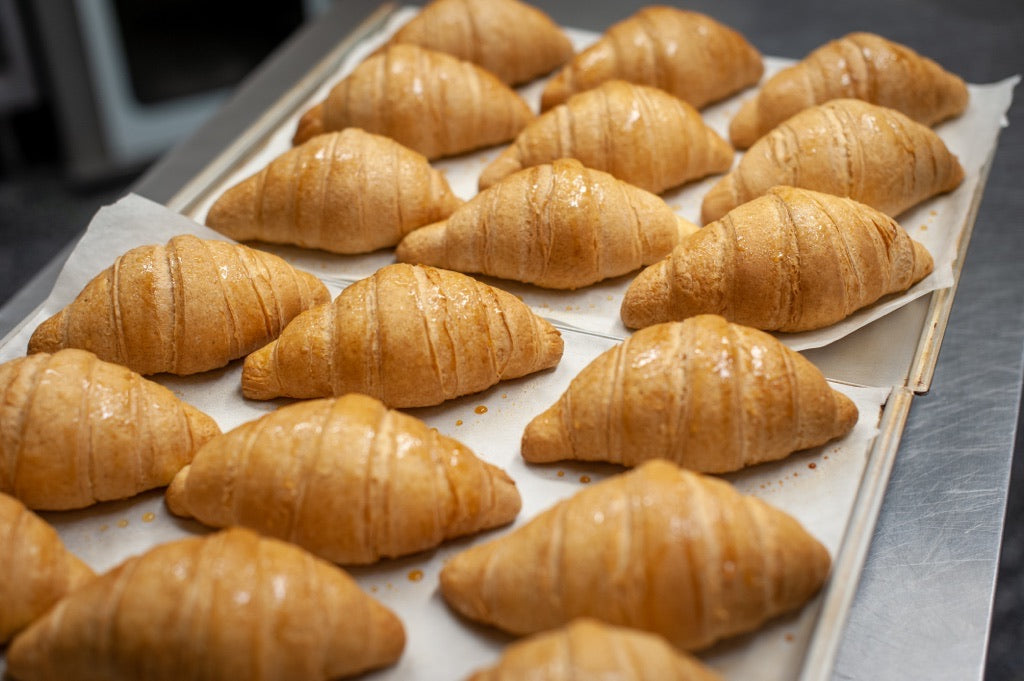
A Study in Lady Margarine
[Thanks, Charlie Trotter]
Can changing just the margarine used for lamination completely transform a gluten-free croissant? I conducted a simple comparison to find out.
One of the greatest challenges in producing vegan and gluten-free croissants is choosing the right margarine for lamination. The ideal product should ensure ease of use, excellent performance during proofing and baking, good value for money, high palatability, and an ingredient profile aligned with current market demands and consumer expectations.
This comparison demonstrates that a professional puff pastry margarine is not automatically the best choice, just as a supermarket margarine is not necessarily an inferior product. The differences are largely linked to characteristics such as plasticity and melting profile, which strongly influence both the lamination process and the final product.
For this test, everything remained exactly the same: recipe, ingredients, procedure, proofing, and baking conditions. The only variable was the margarine.
Many pastry chefs tend to think that a disappointing result is due to technique or the recipe. Sometimes, however, the real difference simply lies in choosing the most suitable margarine.
Test Recipe
Dry Ingredients
200g potato starch
60g tapioca starch
40g rice flour
40g sugar
30g ANGEL MIX 3.0
25g fresh baker's yeast
4g salt
Liquid Ingredients
180g very cold water
10g vegetable oil
For Lamination
150g margarine
Procedure
Three single folds at a final thickness of 8mm (0.31 inch)
Cut into 8 croissants from the 8mm (0.31 inch) dough sheet
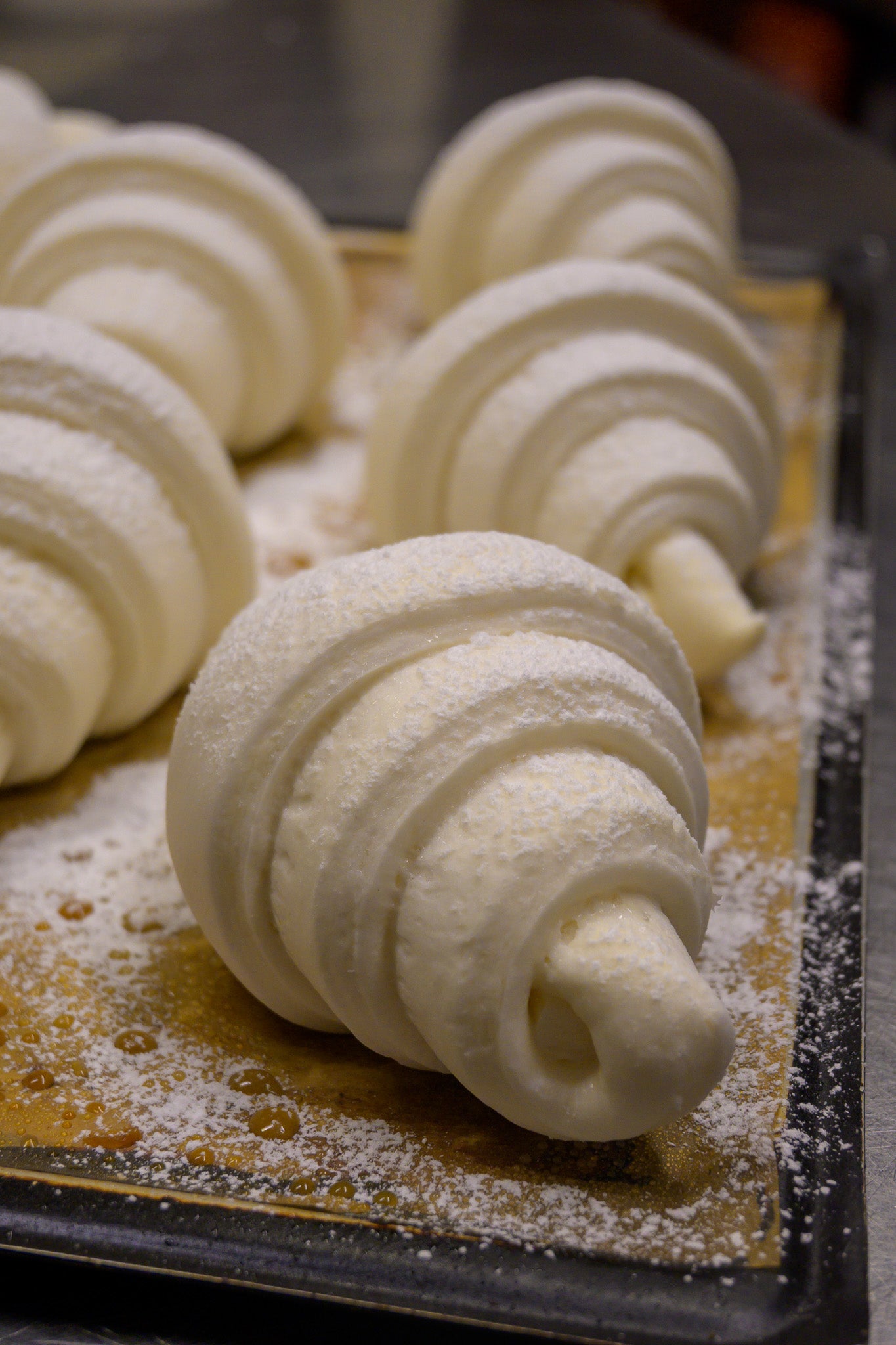
Proof, covered, for 60-70 minutes at 40°C (104°F)
Bake in a convection oven for 23 minutes at 180°C (356°F)


 Final Thoughts
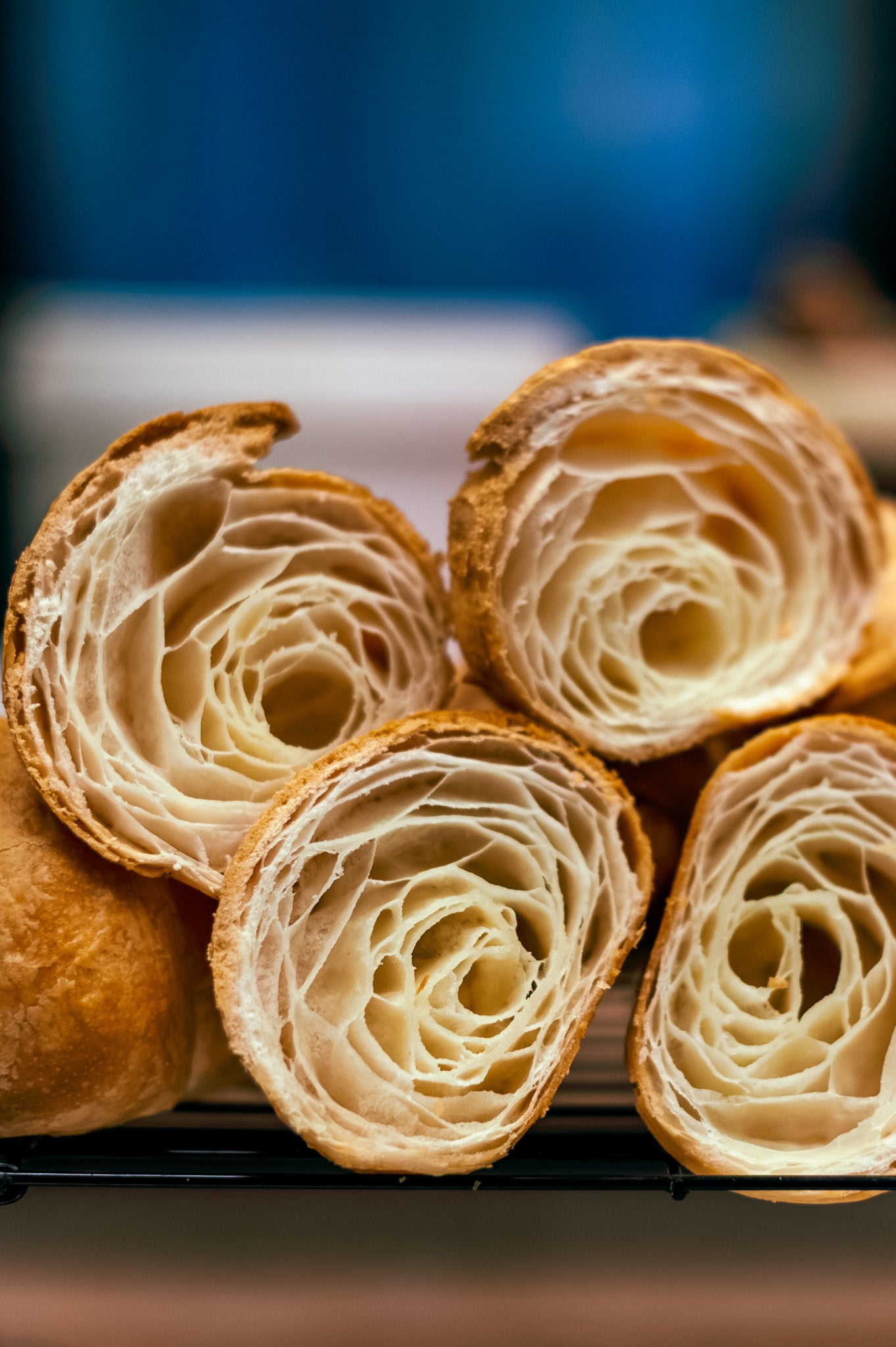
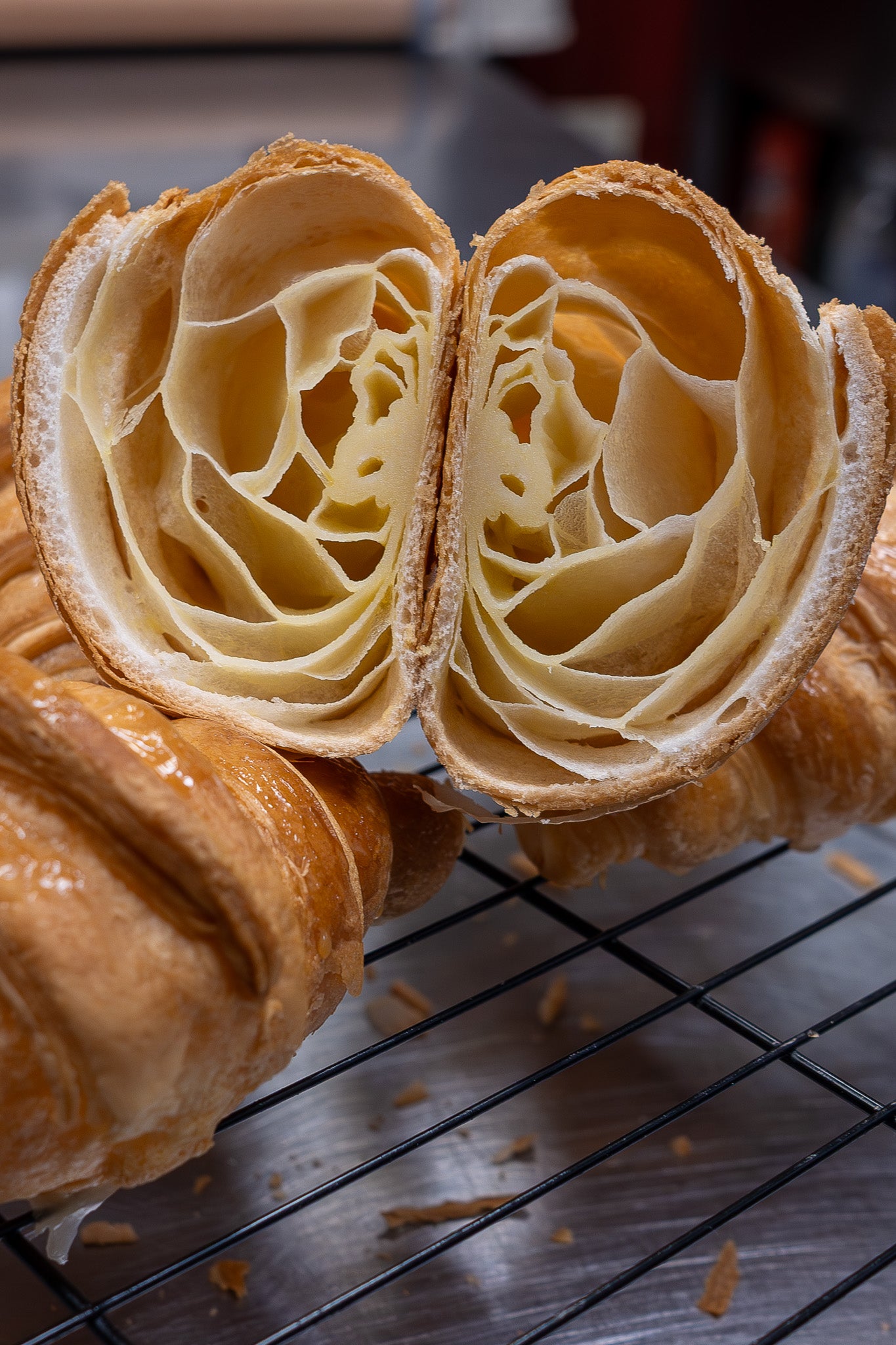
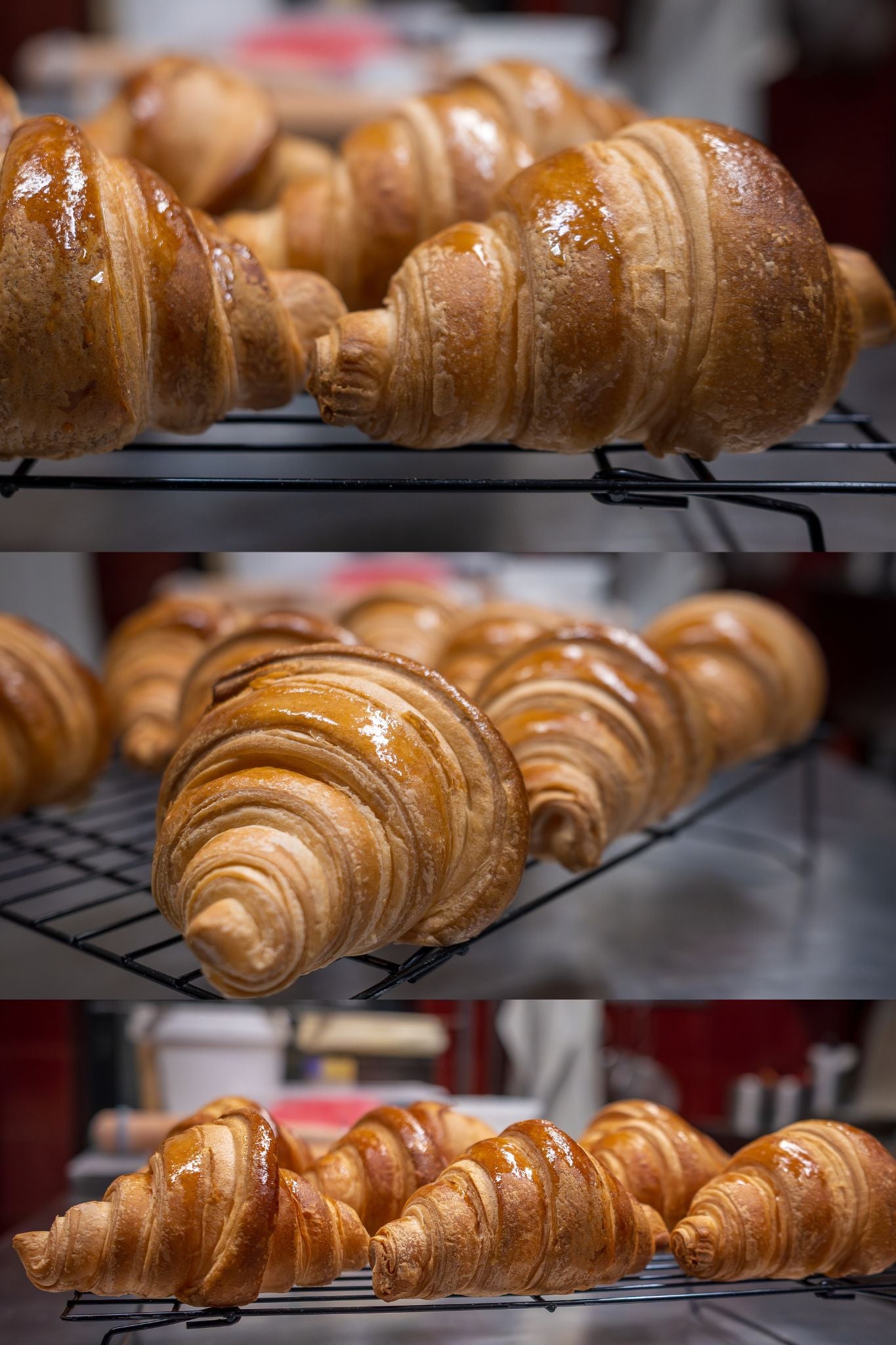
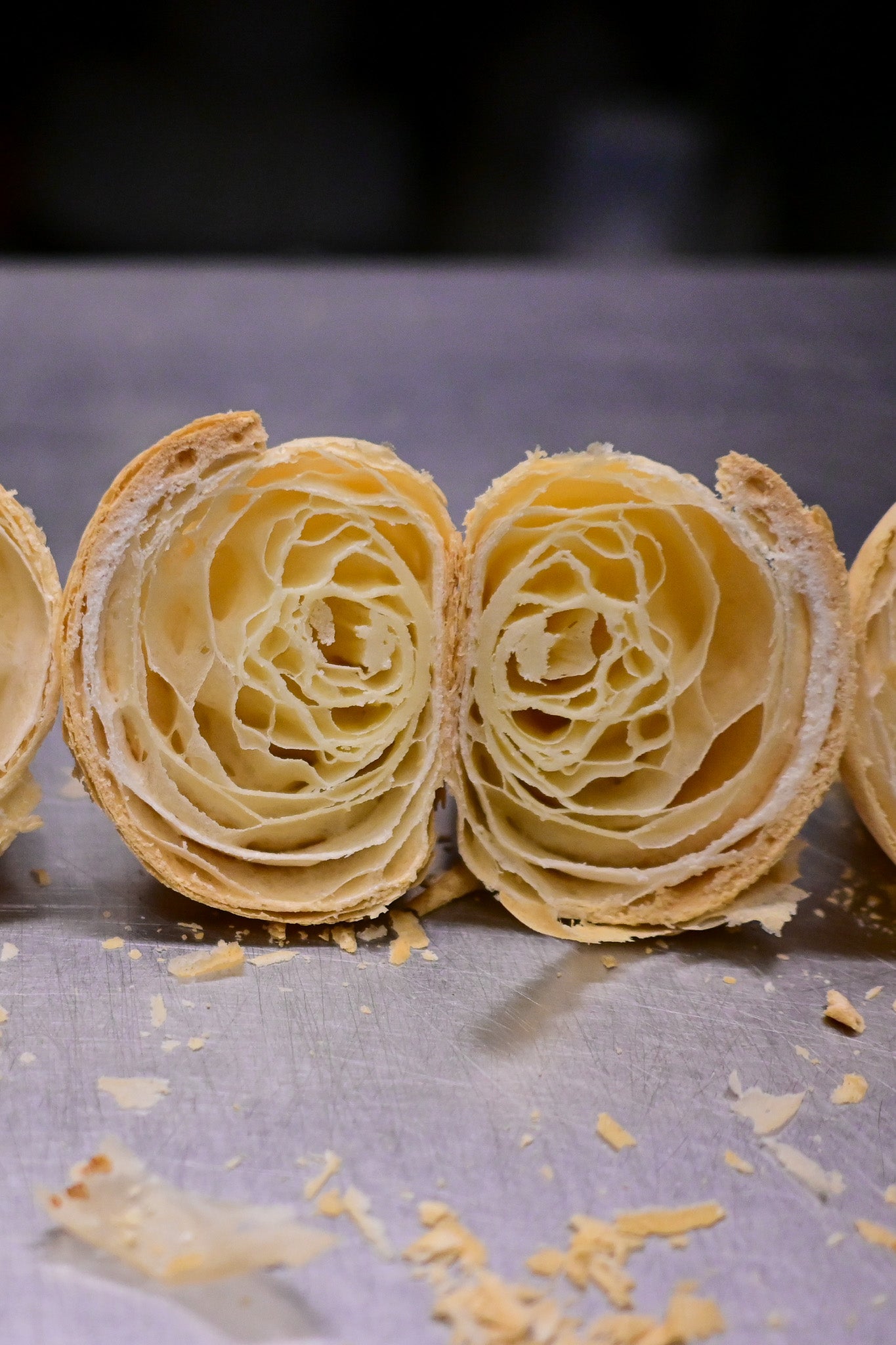
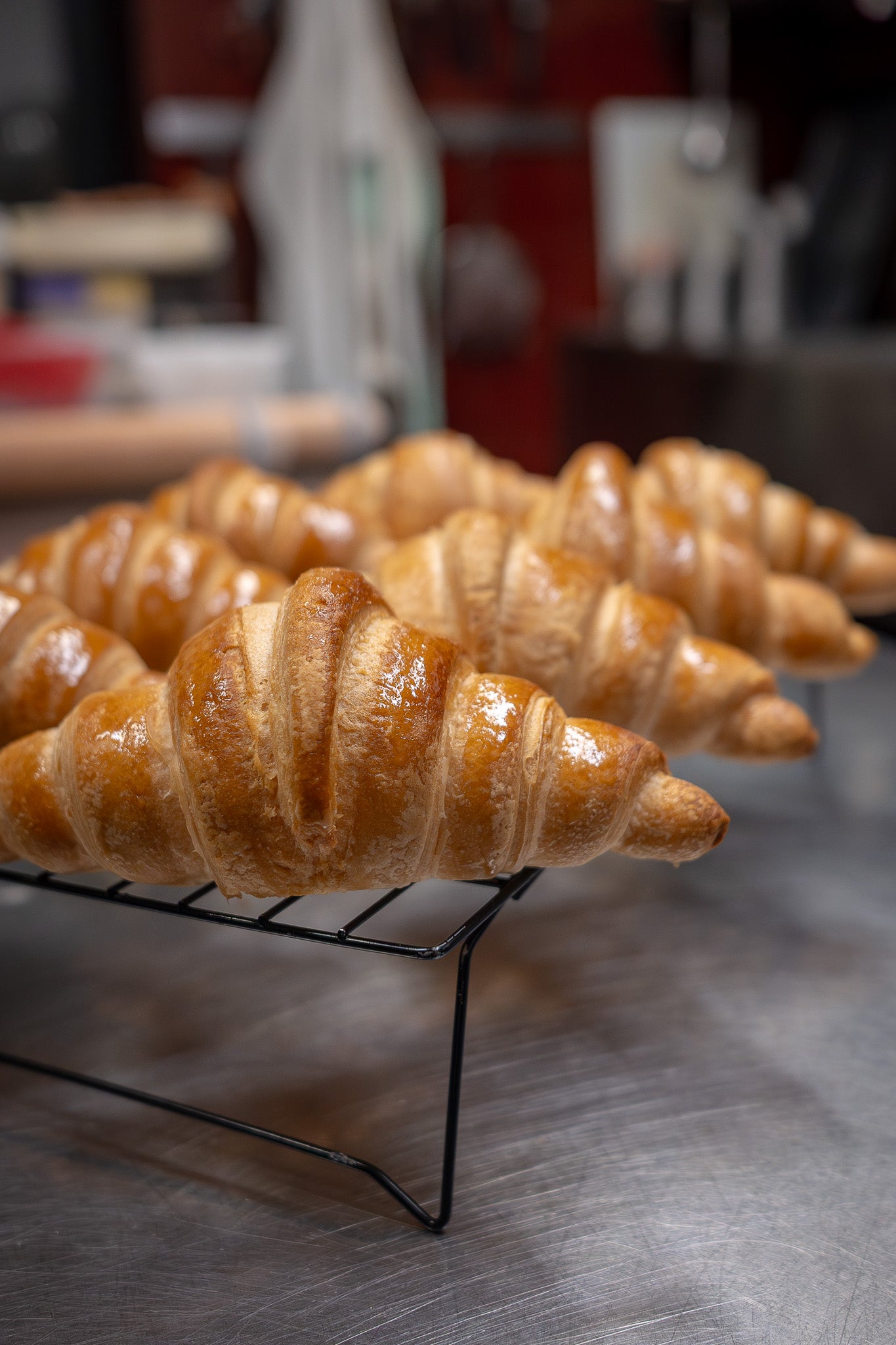
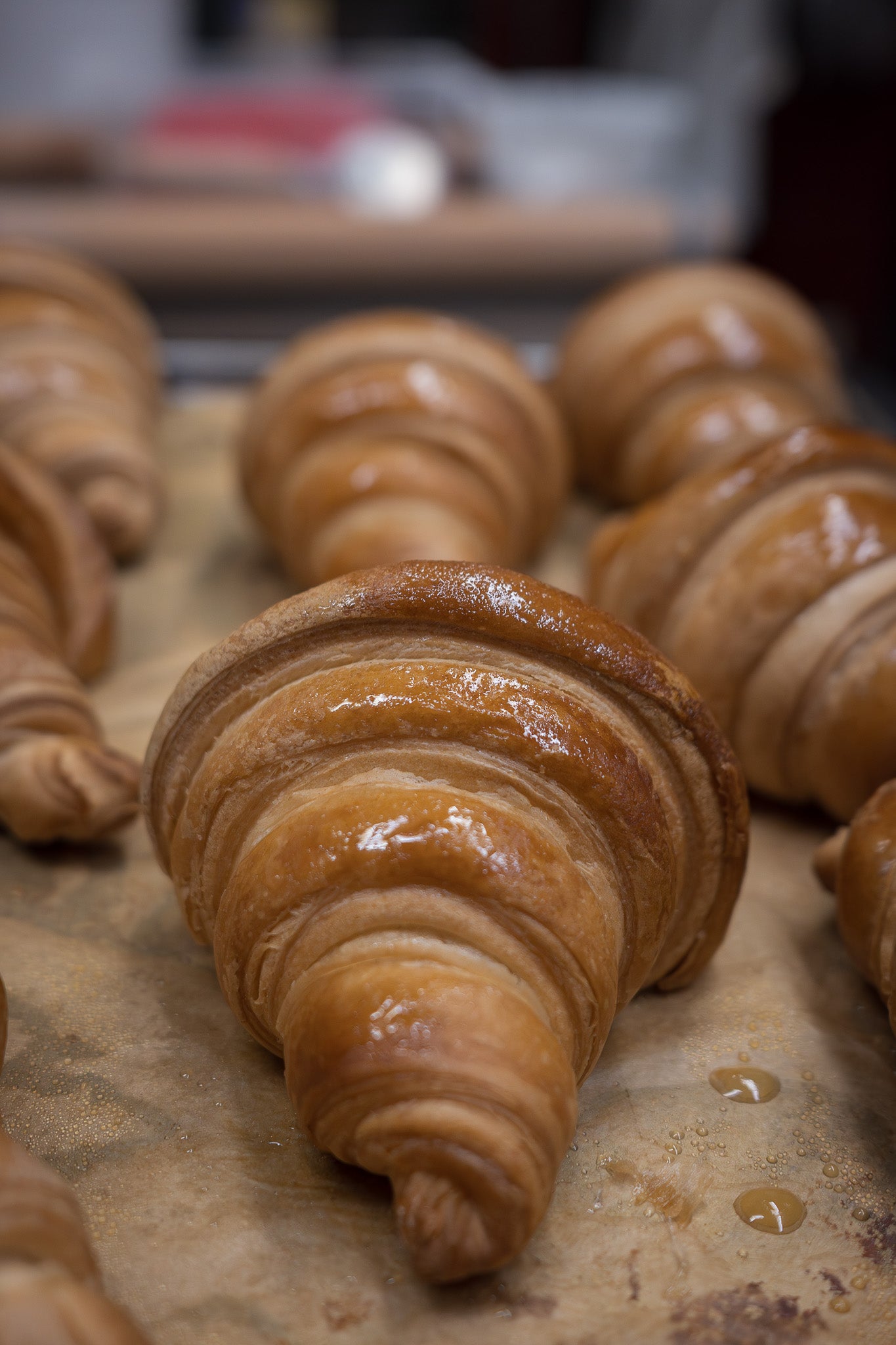
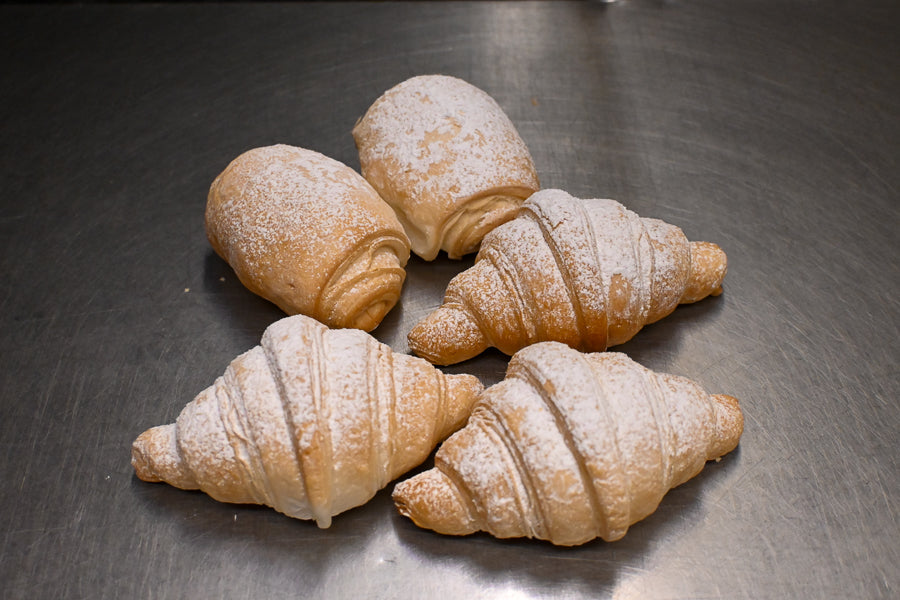
Margarine A is a supermarket product. It produced a light, flaky croissant with excellent rise and a clean, non-greasy finish. From a purely visual standpoint, it yielded the best overall result among the three margarines tested.
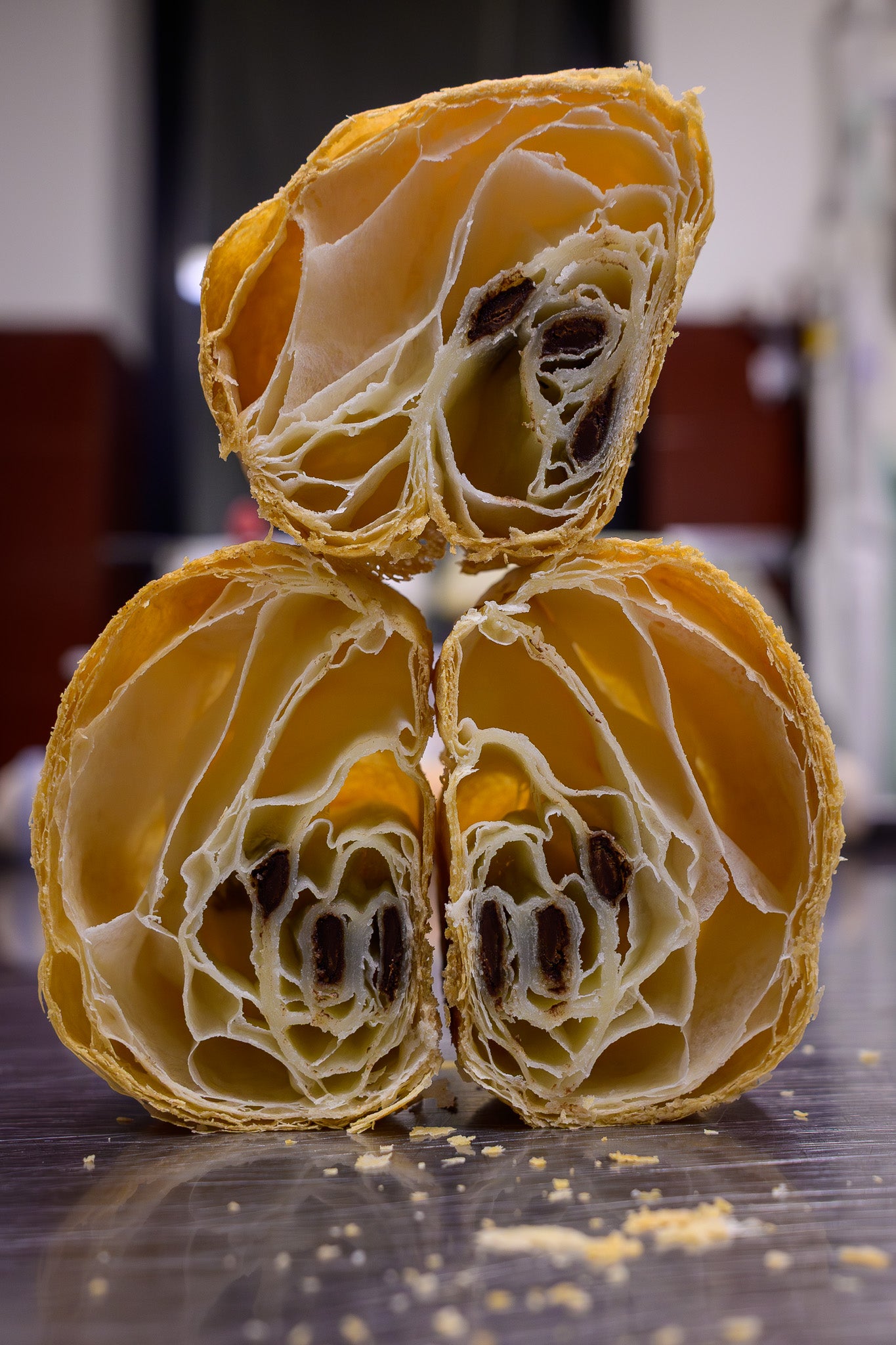
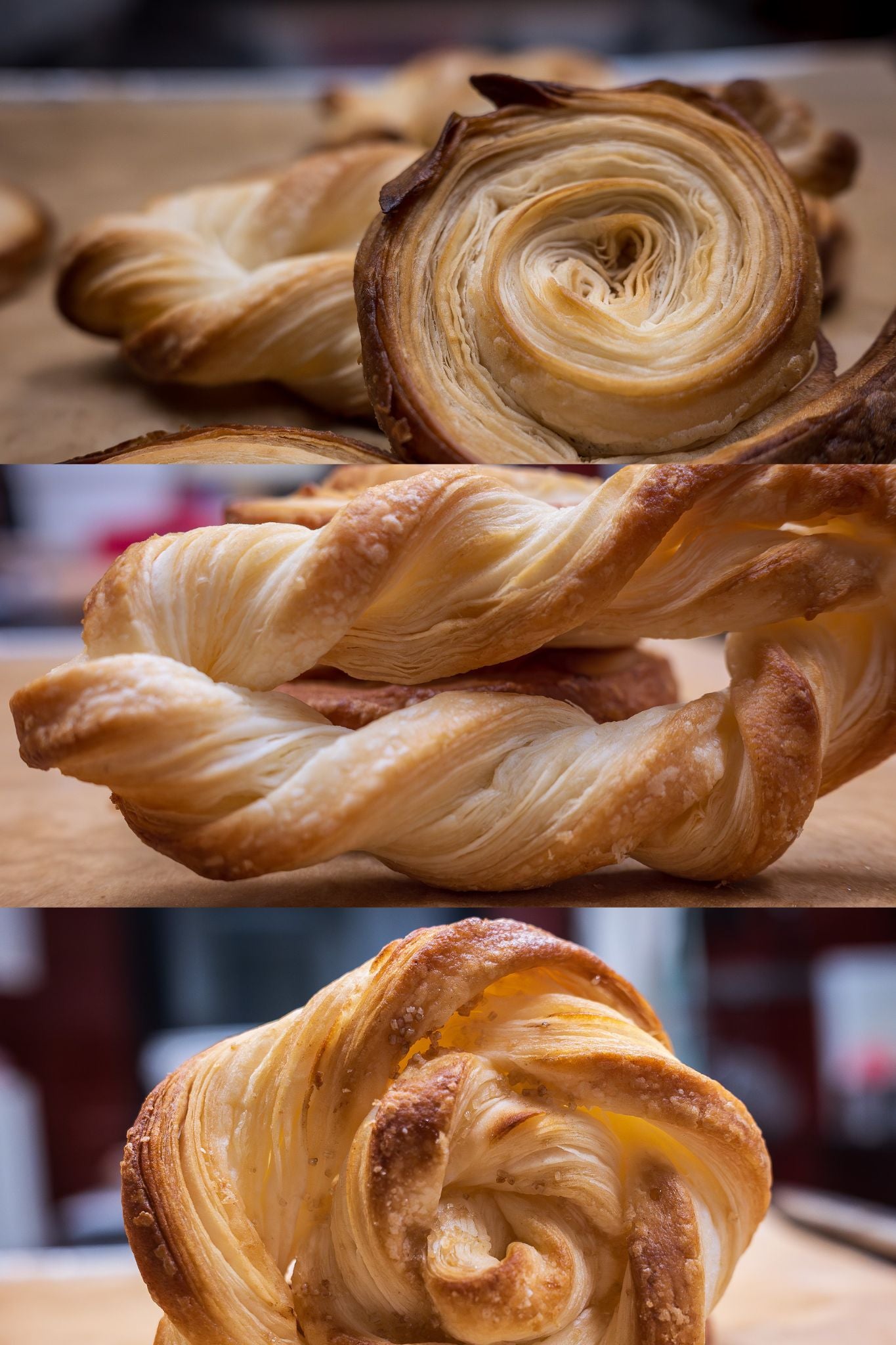
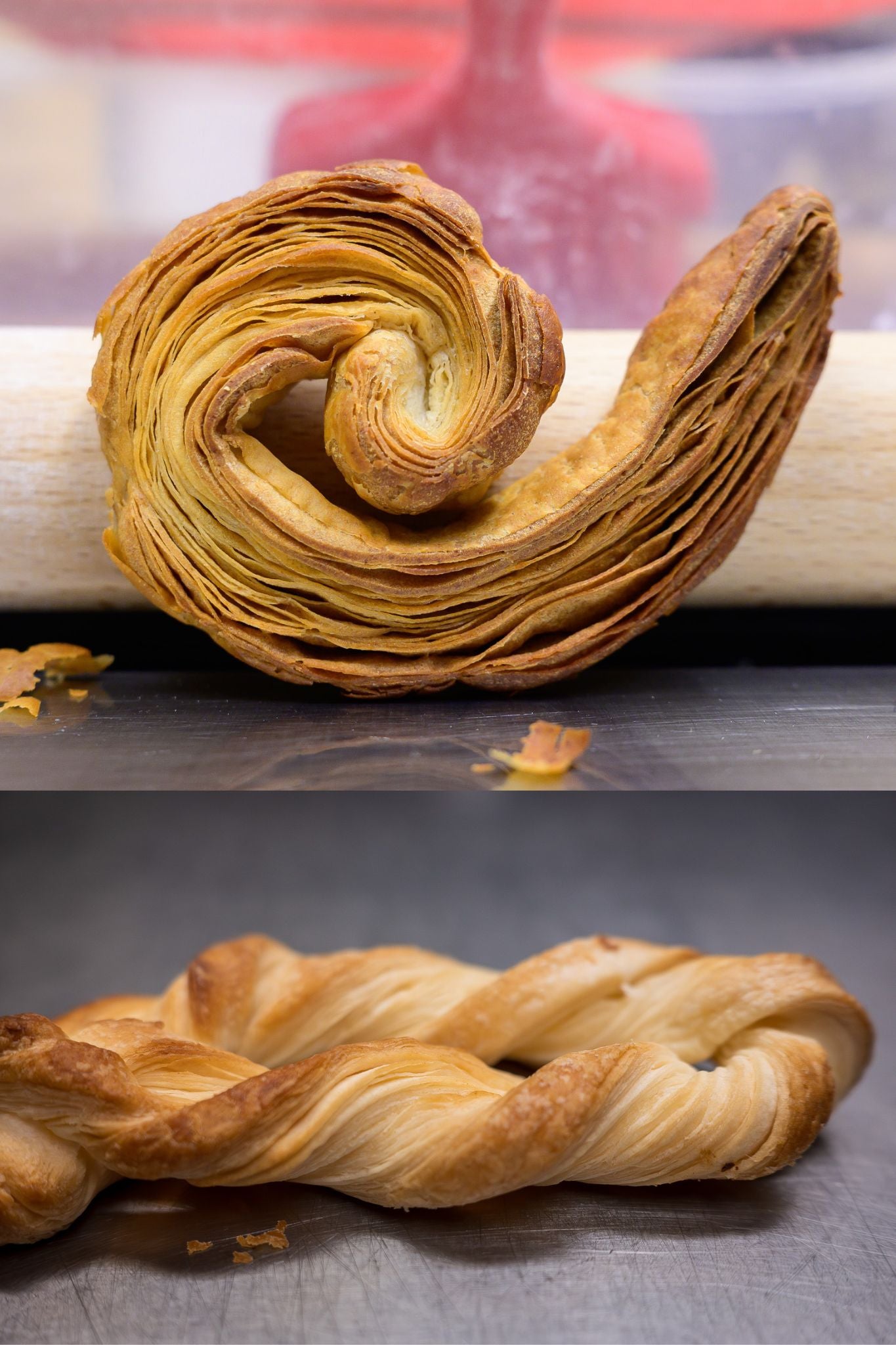
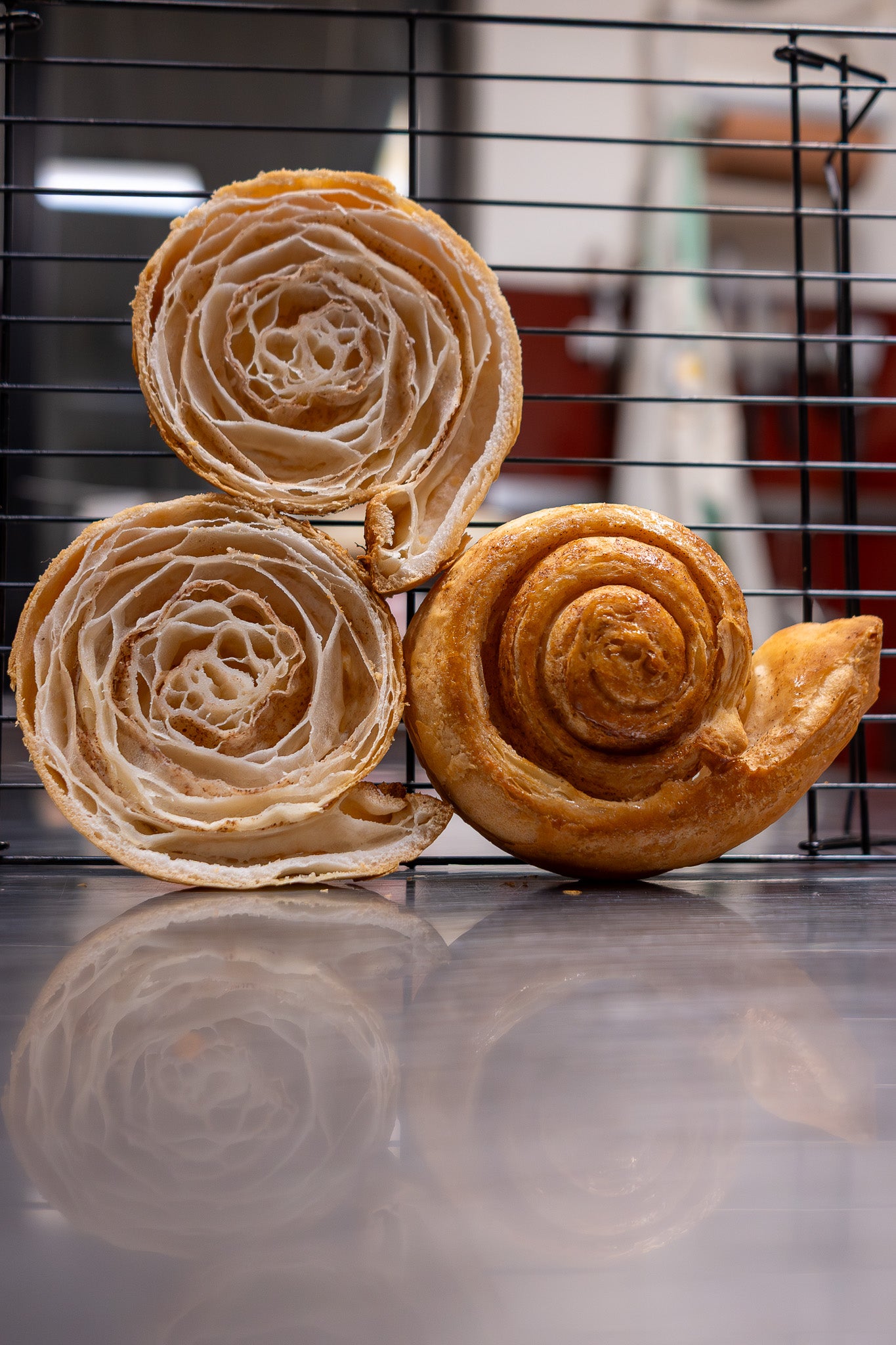
Margarine B is also a supermarket product. Unlike Margarine A, however, it did not tolerate the high ambient temperature of the laboratory (30°C / 86°F), resulting in a very disappointing final product.
Margarine C is a professional lamination margarine, specifically formulated for puff pastry and croissants. It proved to be the best in terms of workability, plasticity, and ease of use, while still producing a high-quality result. However, despite being more challenging to work with, Margarine A ultimately produced the better croissant.
This is not intended to be a scientific study, but a practical comparison conducted while maintaining identical conditions.
Naturally, butter has its own unique characteristics. However, this comparison is not meant to pit butter against margarine: it is meant to show how different margarines can behave very differently when used under the same conditions.
The title is a tribute to Charlie Trotter and his "A Study in Lady Apples", featured in the book Charlie Trotter's Desserts, in which a single ingredient was used to achieve surprisingly different results.


Share: