Product used: Angel Mix 3.0 Quantity: 8 pieces Preparation time: 25 minutes Proofing:80 minutes @ 32°C @ 50% RH Baking:19 minutes @ 180°C in a fan oven Level:Difficult
Our recipes are designed to inspire your creativity and talent, helping you create unique, high quality gluten-free products. Try them and then adapt them to your needs, just like a true artisan who makes everything they make unique .
Liquids:
180g Water at room temperature
15g Vegetable oil
For laminating:
150g Butter for puff pastry (e.g., Corman butter 82% fat)
Procedure:
Combine all the dry ingredients in the bowl of a stand mixer and start mixing at low speed, preferably using the paddle attachment.
Gradually pour in the liquids in a steady stream and increase to medium-high speed, continuing to mix for 5–6 minutes. From time to time, with the machine stopped, scrape down the sides of the bowl with a spatula and bring the dough back to the center.
It is important to obtain a smooth, homogeneous, firm mixture, completely free of lumps.
Meanwhile, shape the butter into a rectangle about 1cm thick. It does not need to be perfectly precise; an even thickness is sufficient. If the ambient temperature is particularly high, it can help to place the butter in the refrigerator for 3–4 minutes before the laminating stage. Conversely, if the ambient temperature is below 20°C, it is recommended to keep the butter in a suitable place so that it becomes compact yet pliable, not hard.
Transfer the dough to the work surface and, using rice starch for dusting, roll it into a long, narrow rectangle 10mm thick, enough to place the butter block in the center and fold the remaining dough over it. This is the classic method for enclosing the fat in laminated puff pastry dough.
Give 3 single folds (“three-folds”) at 10mm thickness, without resting between folds. Use rice starch only if necessary, and avoid overusing it, as it will dry out the dough.
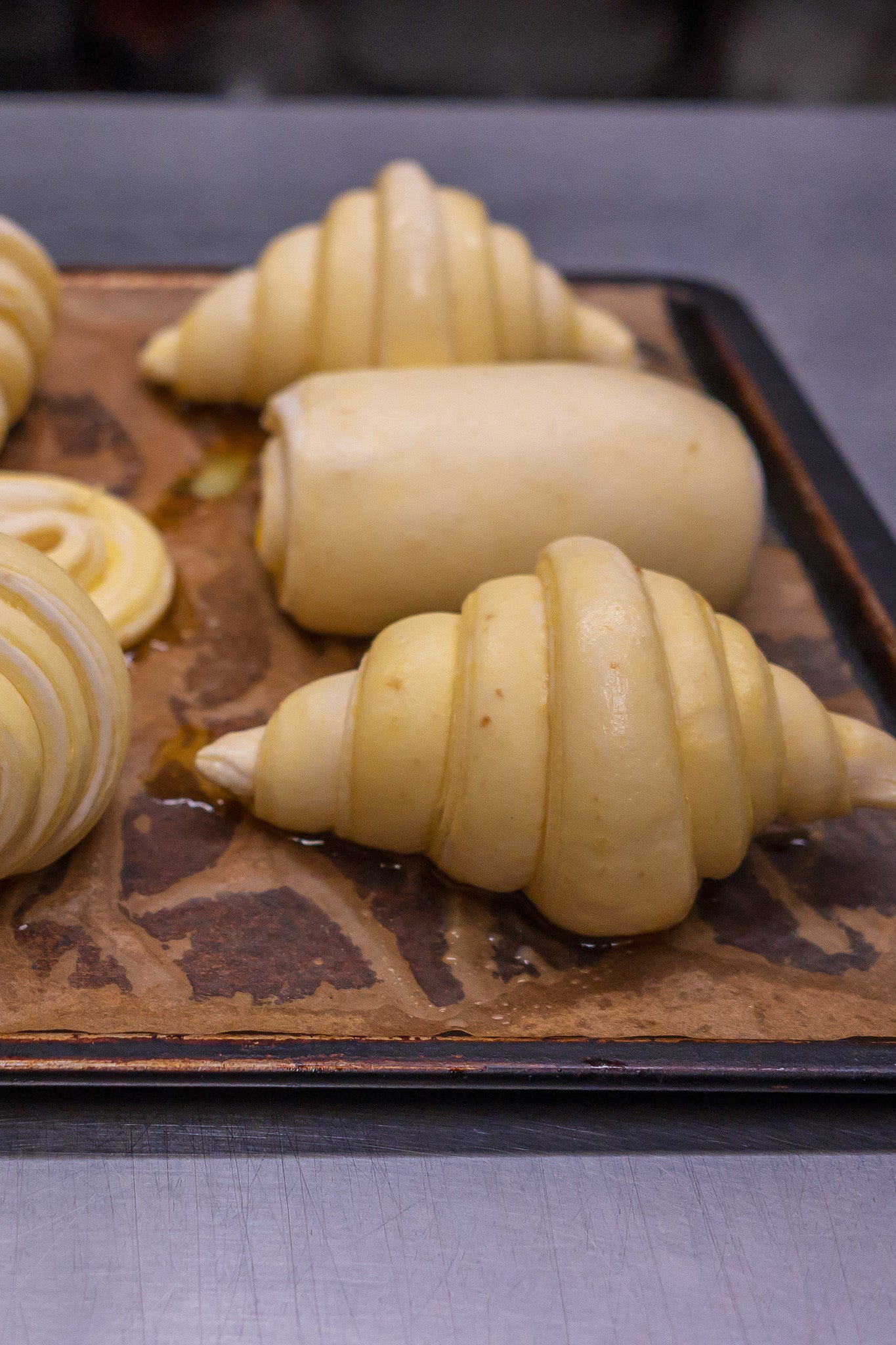
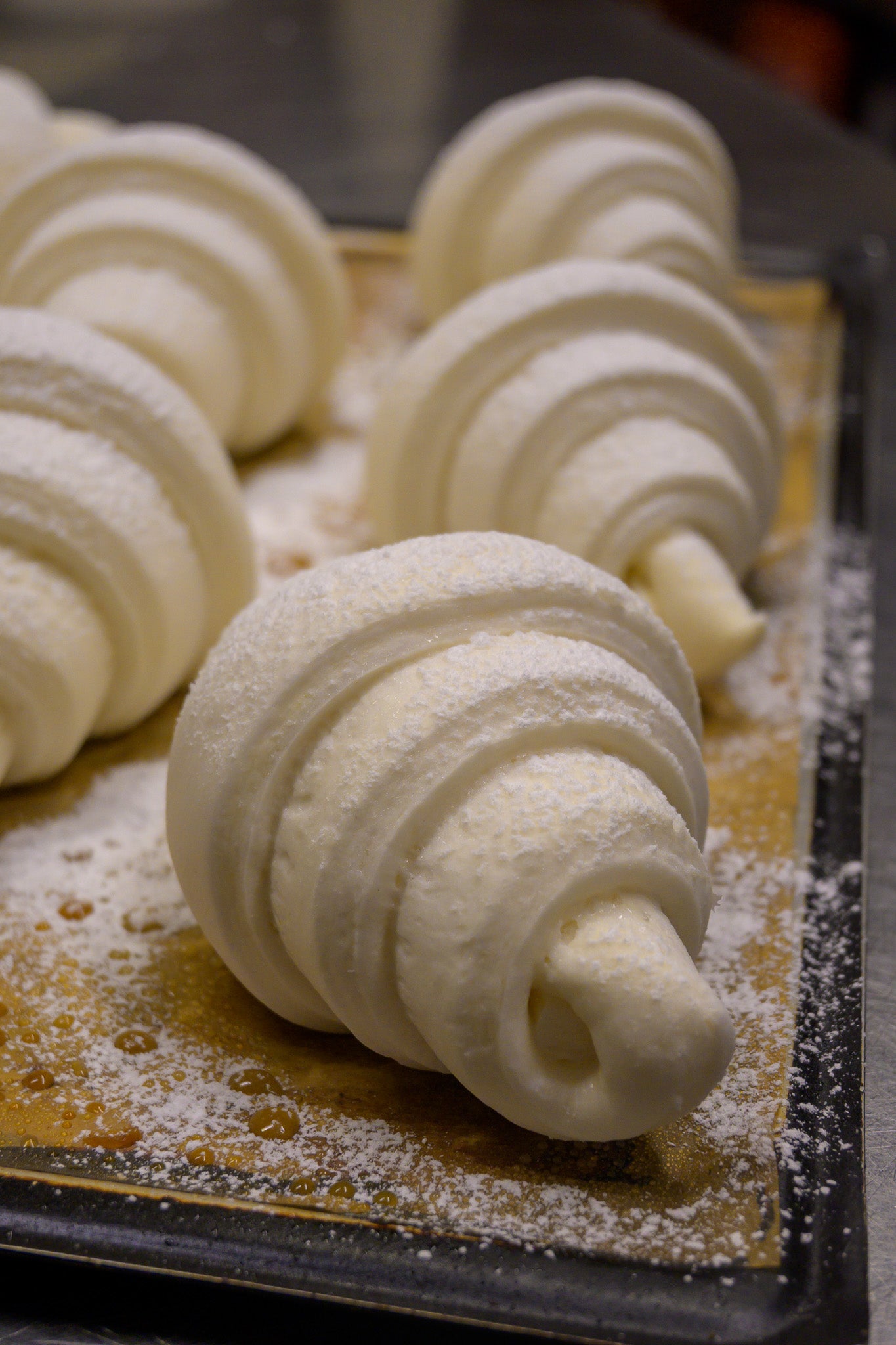
Finally, roll the dough to a thickness of 6mm and cut out the desired shapes. Do not discard any dough scraps; instead, place them in the center of each piece before folding. Lightly spray the surface of the triangle with water and roll it to form the desired product, placing it on a baking tray lined with parchment paper.
Cover with a bag previously brushed with oil or non-stick spray and let the dough proof.
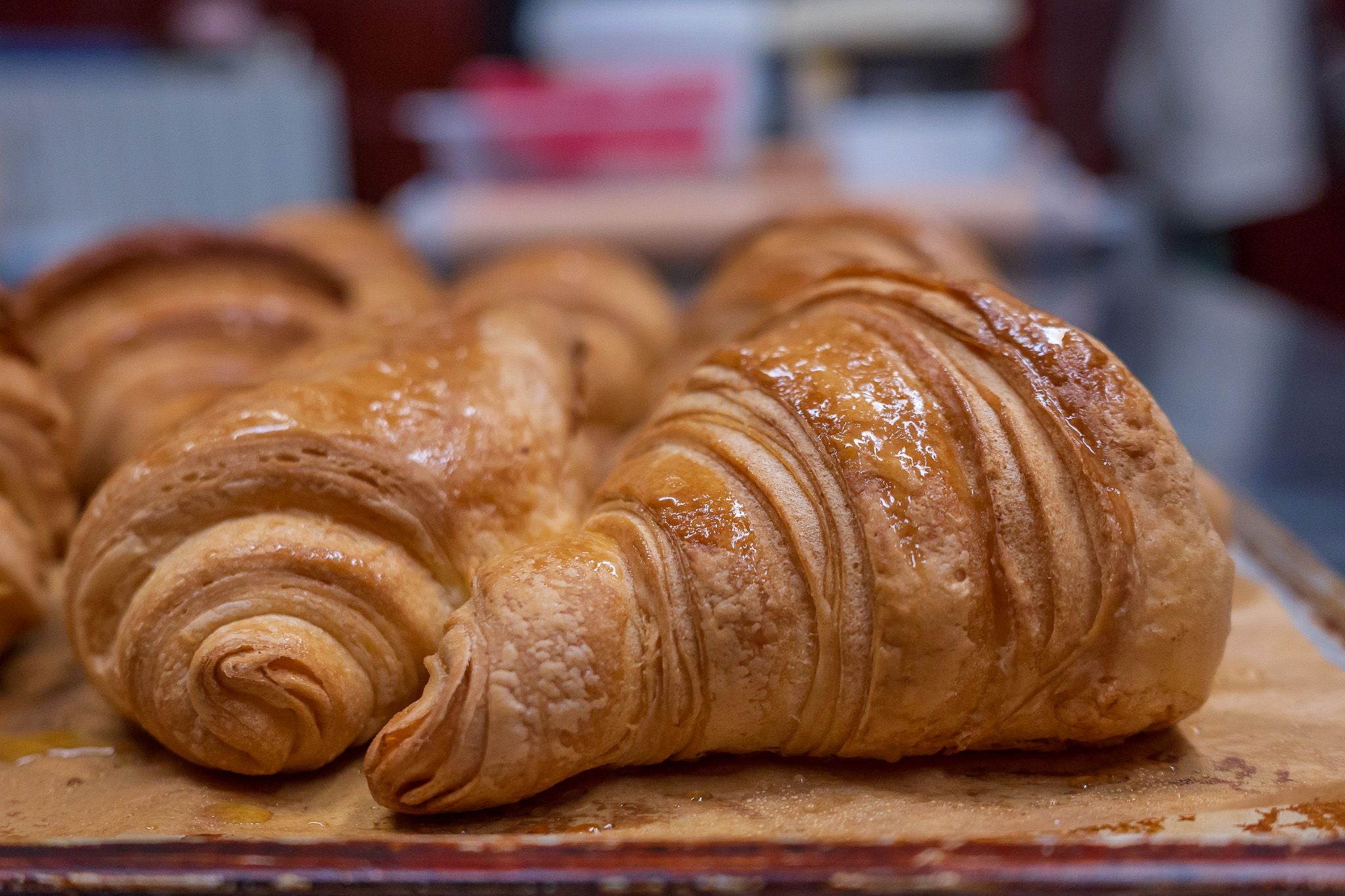
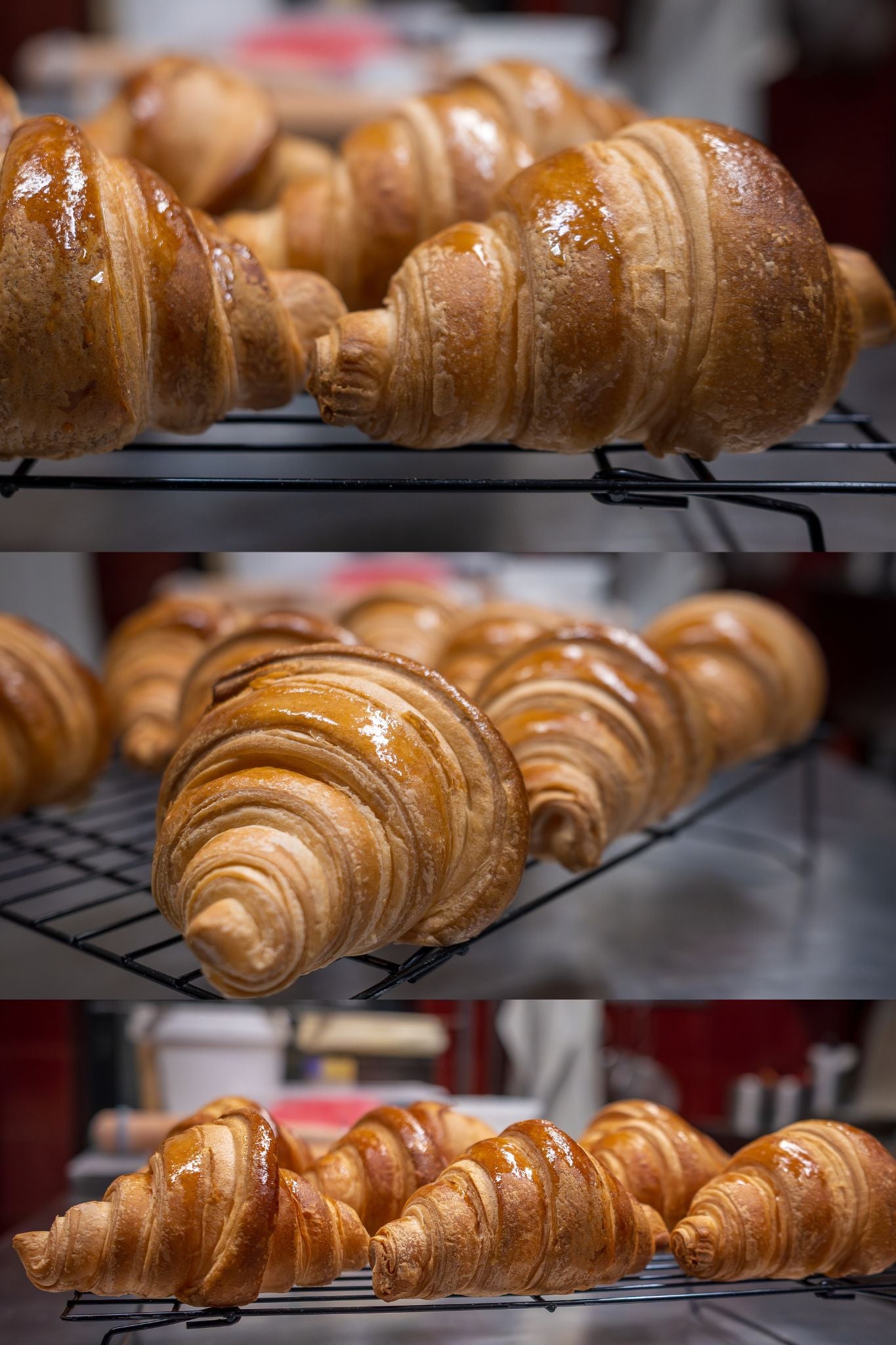
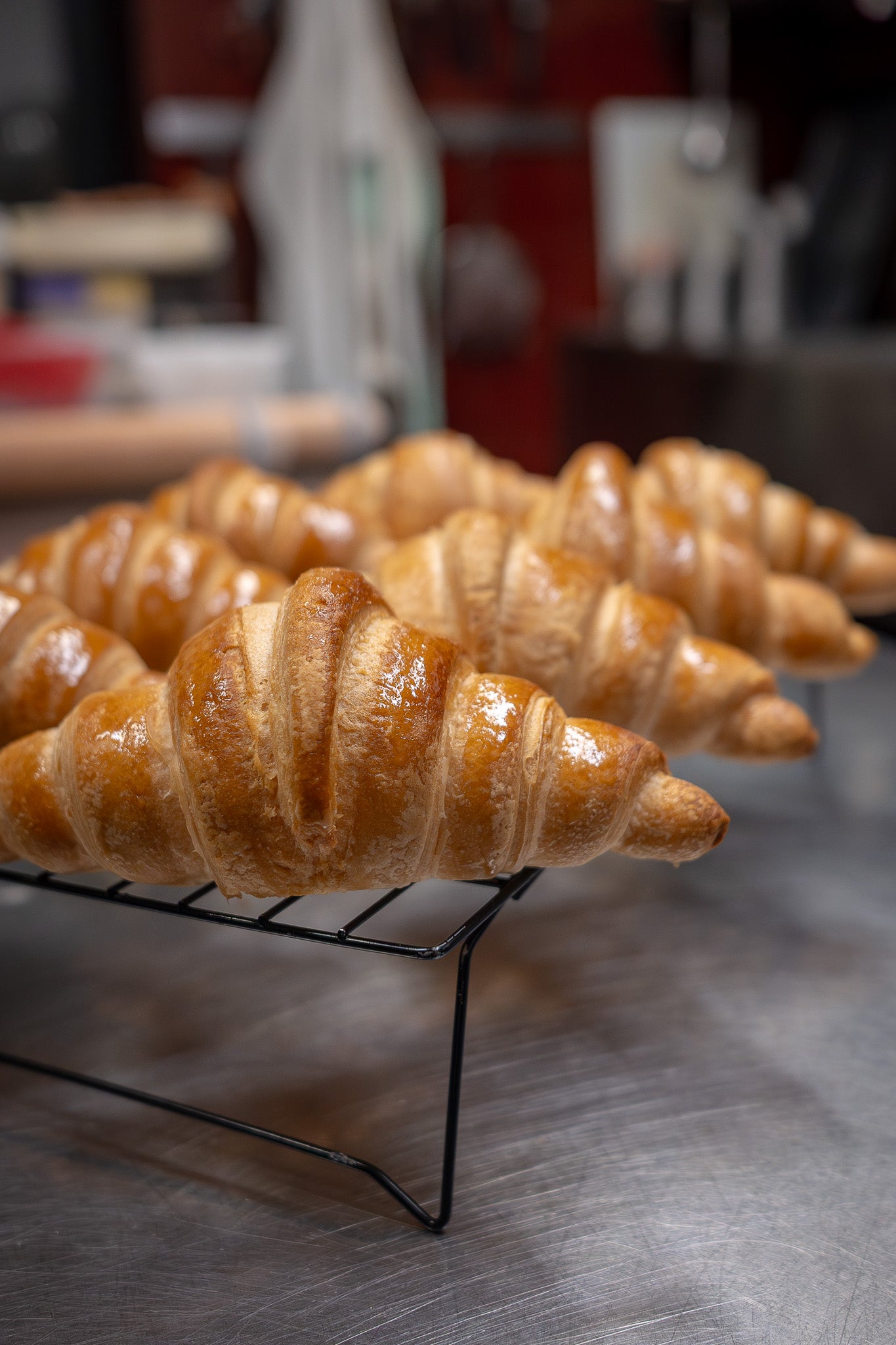
Preheat the oven, remove the tray from the bag, and bake as directed. Optionally, sprinkle the surface of the croissant with our “glazing sugar” for a more pronounced golden color.
Cool on a wire rack, and once cooled, transfer to the freezer. Croissants can be stored at room temperature for approximately 48 hours or up to 30 days at -18°C.
Please note that the indicated baking times and temperatures may vary depending on factors such as the type of equipment used, product sizes, etc., and that the liquids specified in the recipe may need to be adjusted according to the hydration level of the flours and starches used.
Tips & tricks:
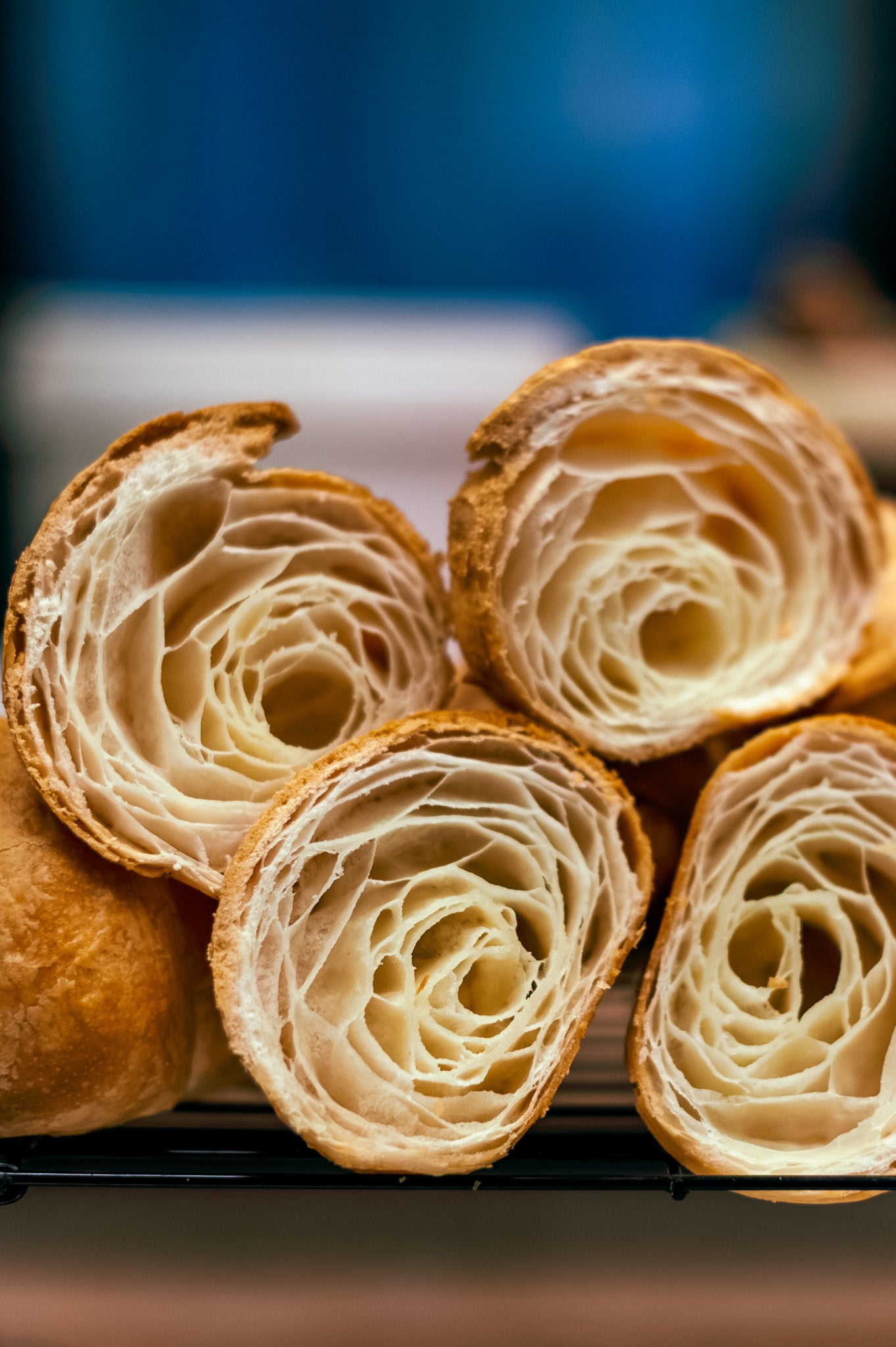
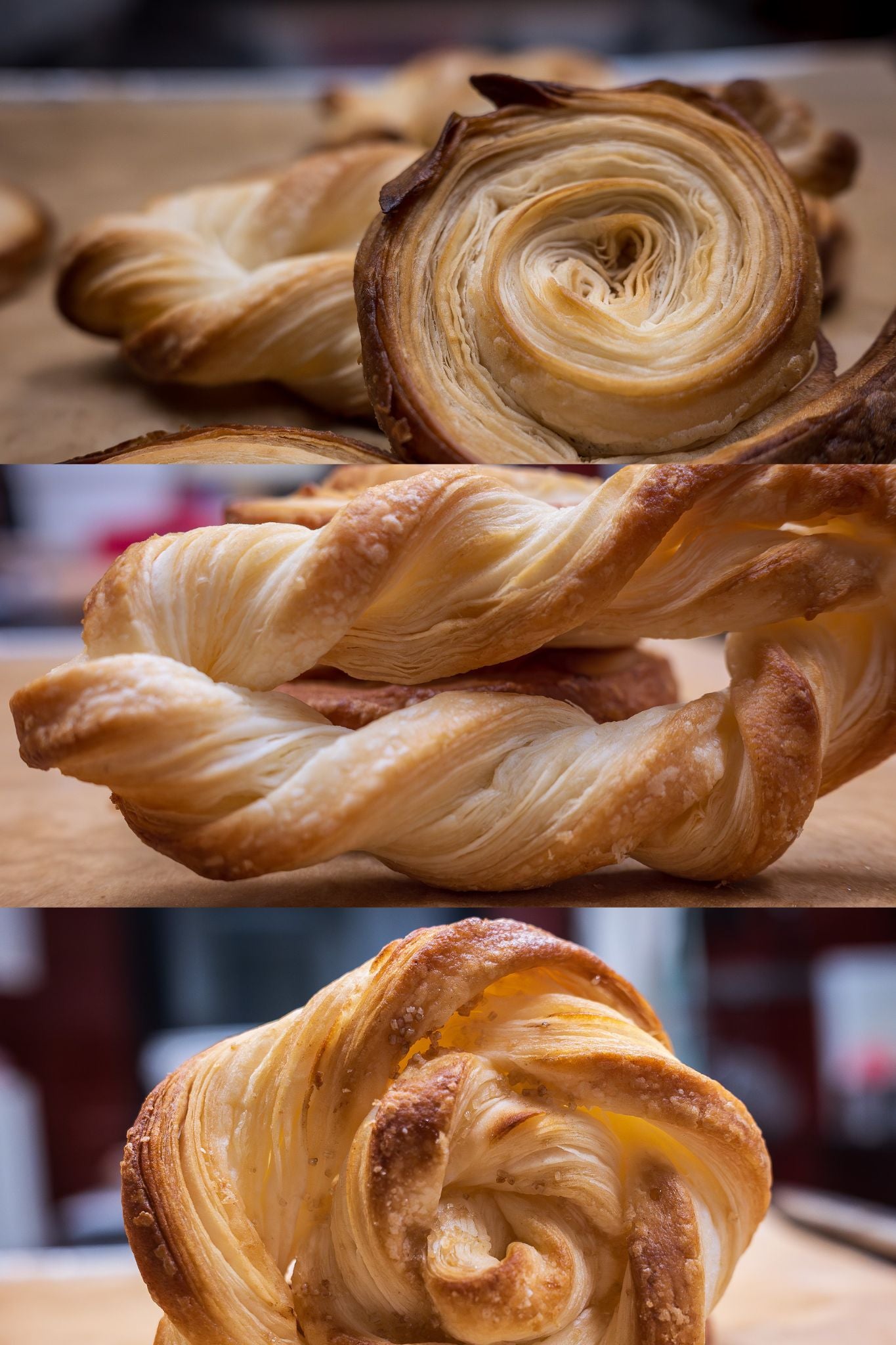
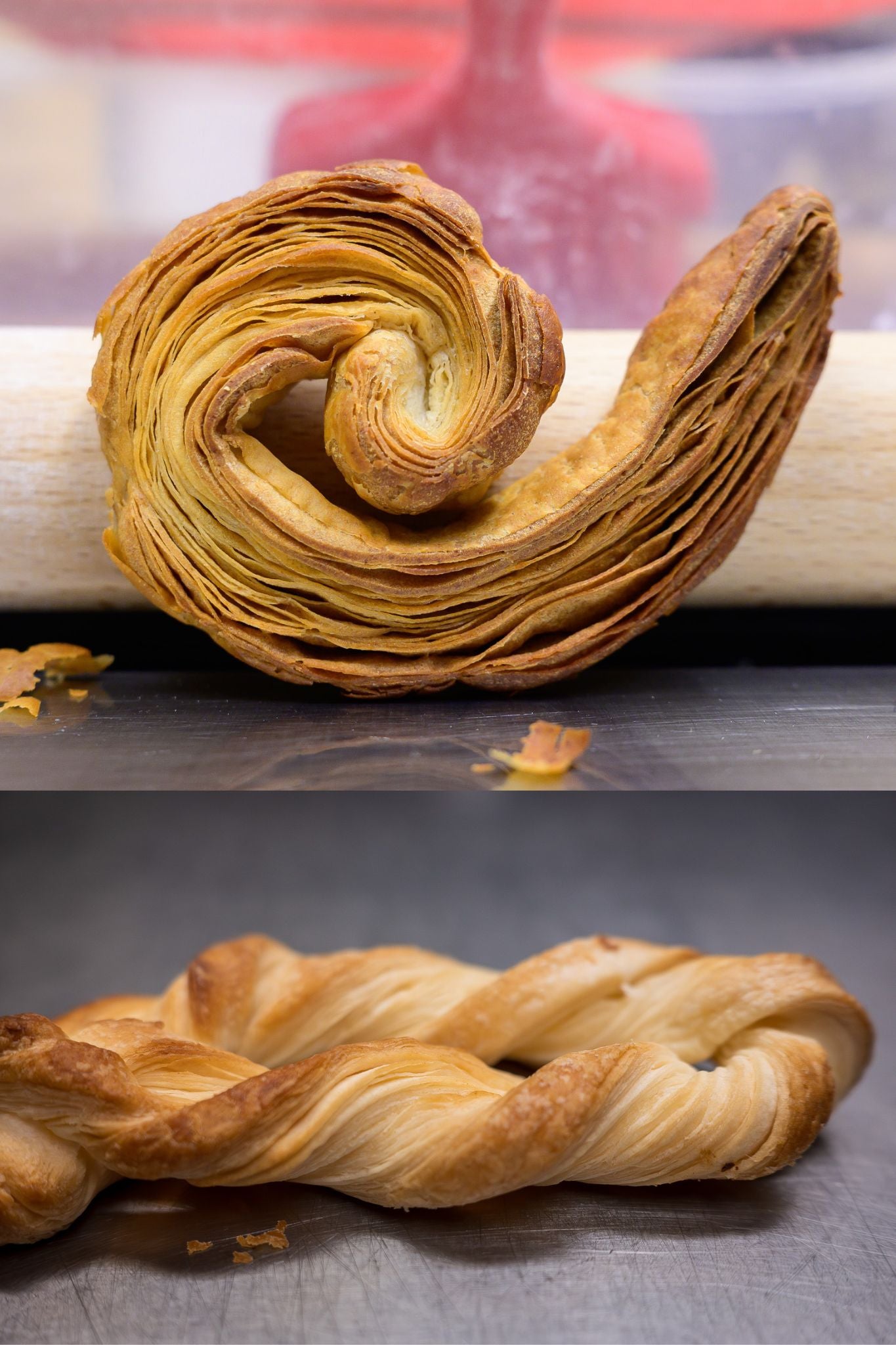
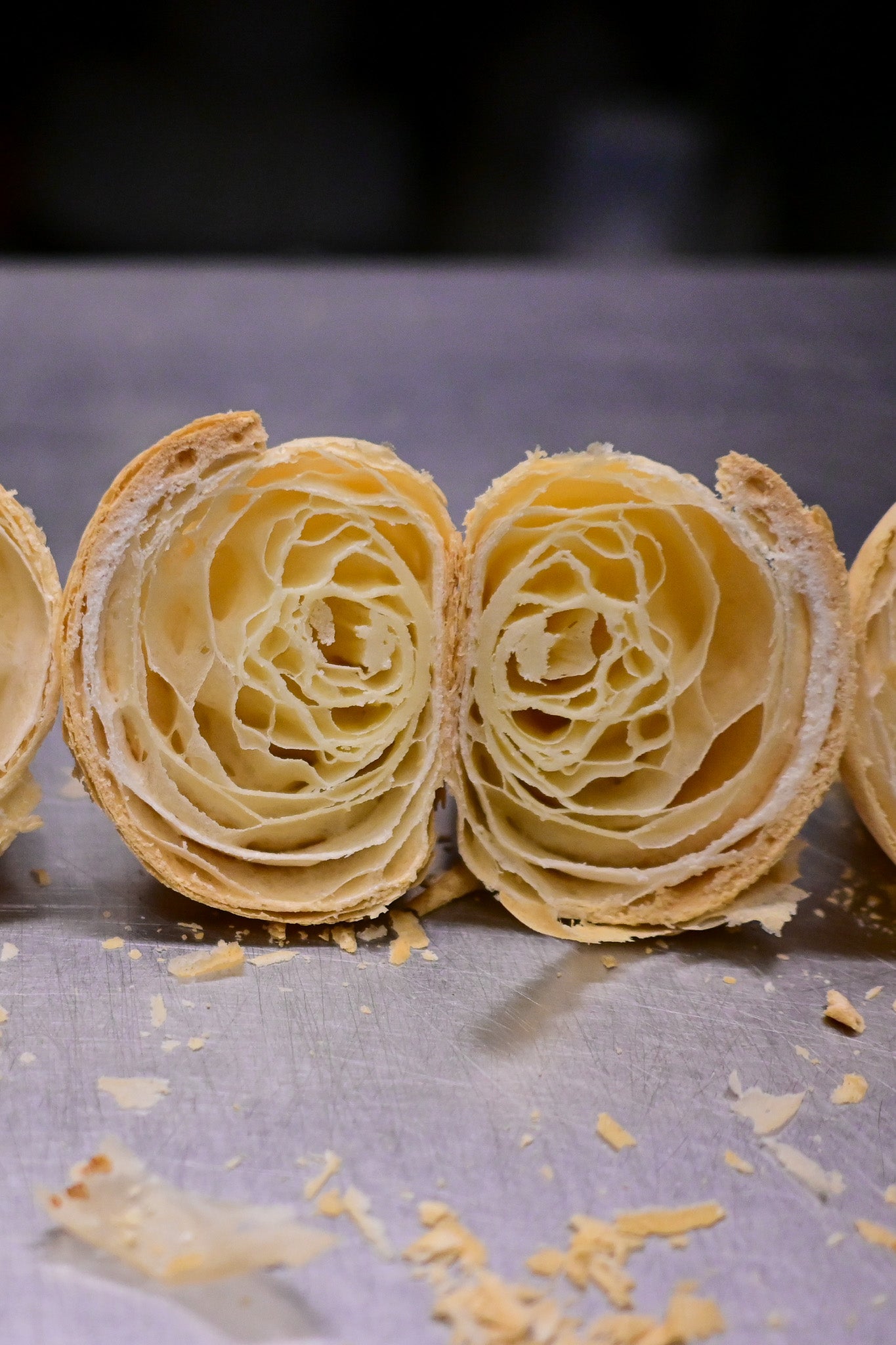
The number and type of folds affect the final result: fewer folds = a more developed and airy product, more folds = a slightly less developed product with a more open crumb structure.
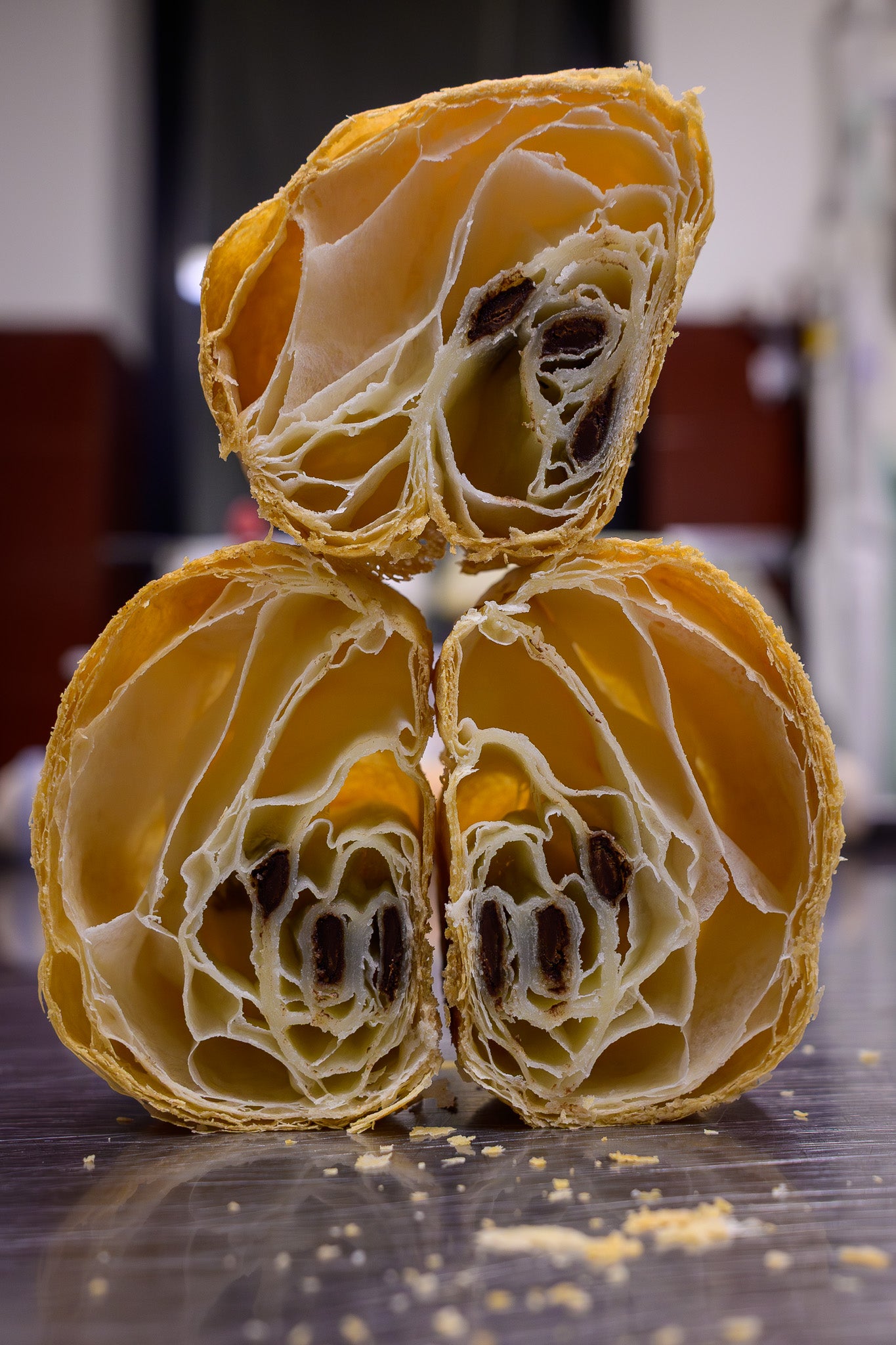
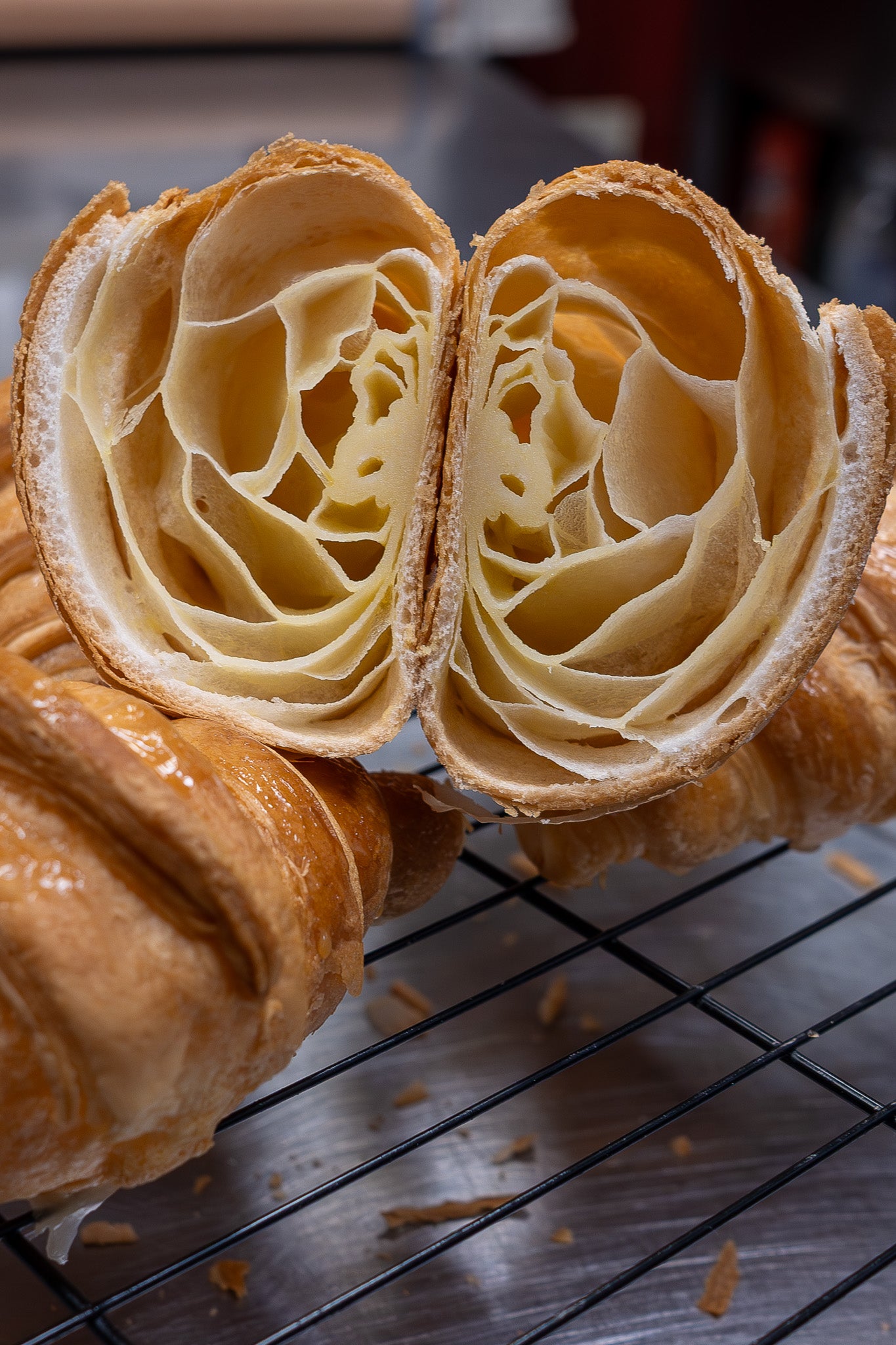
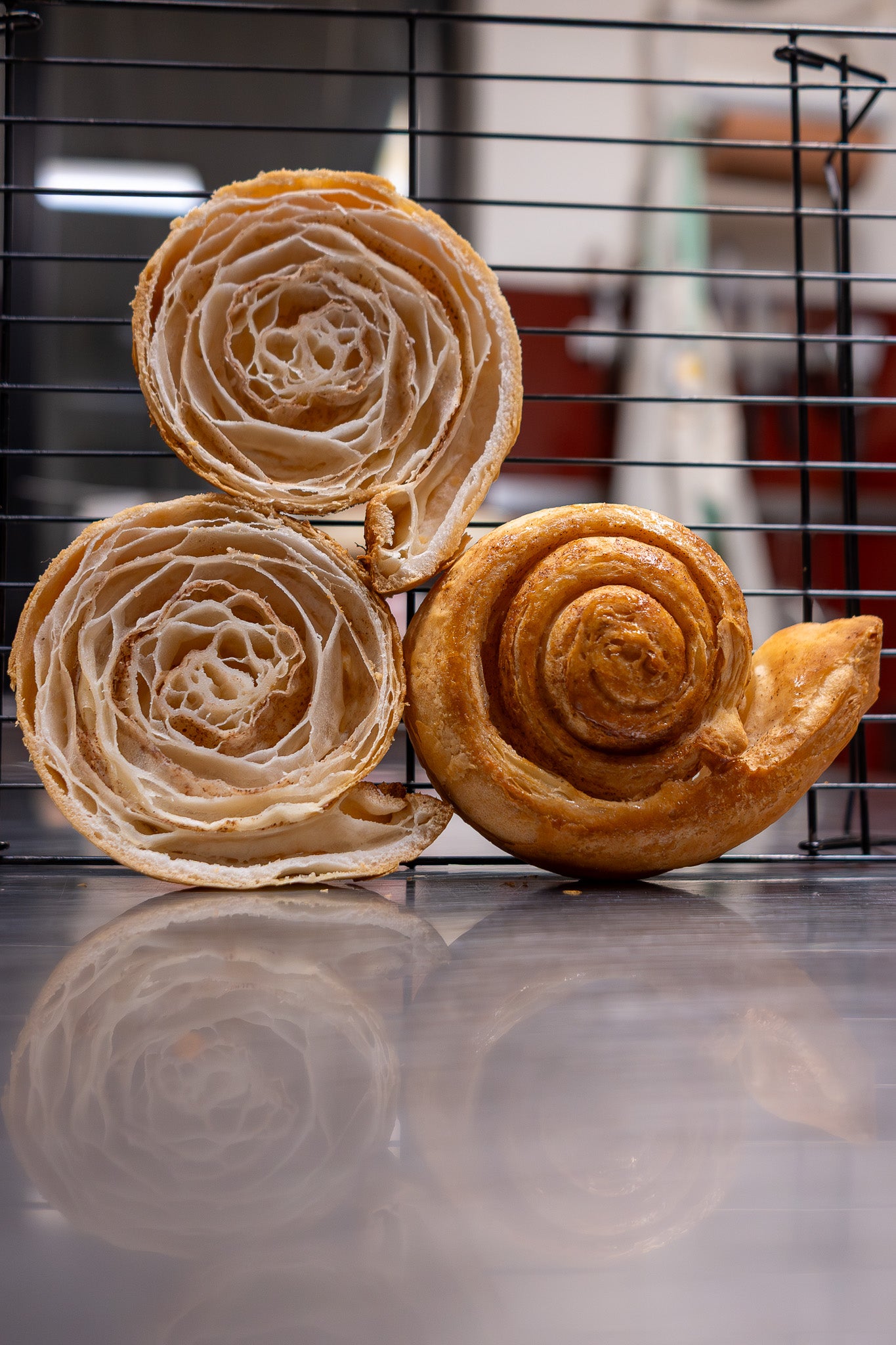
Allow the croissant to cool completely before cutting: this way, the remaining moisture will redistribute inside the pastry, ensuring the crumb is well-defined and visible.
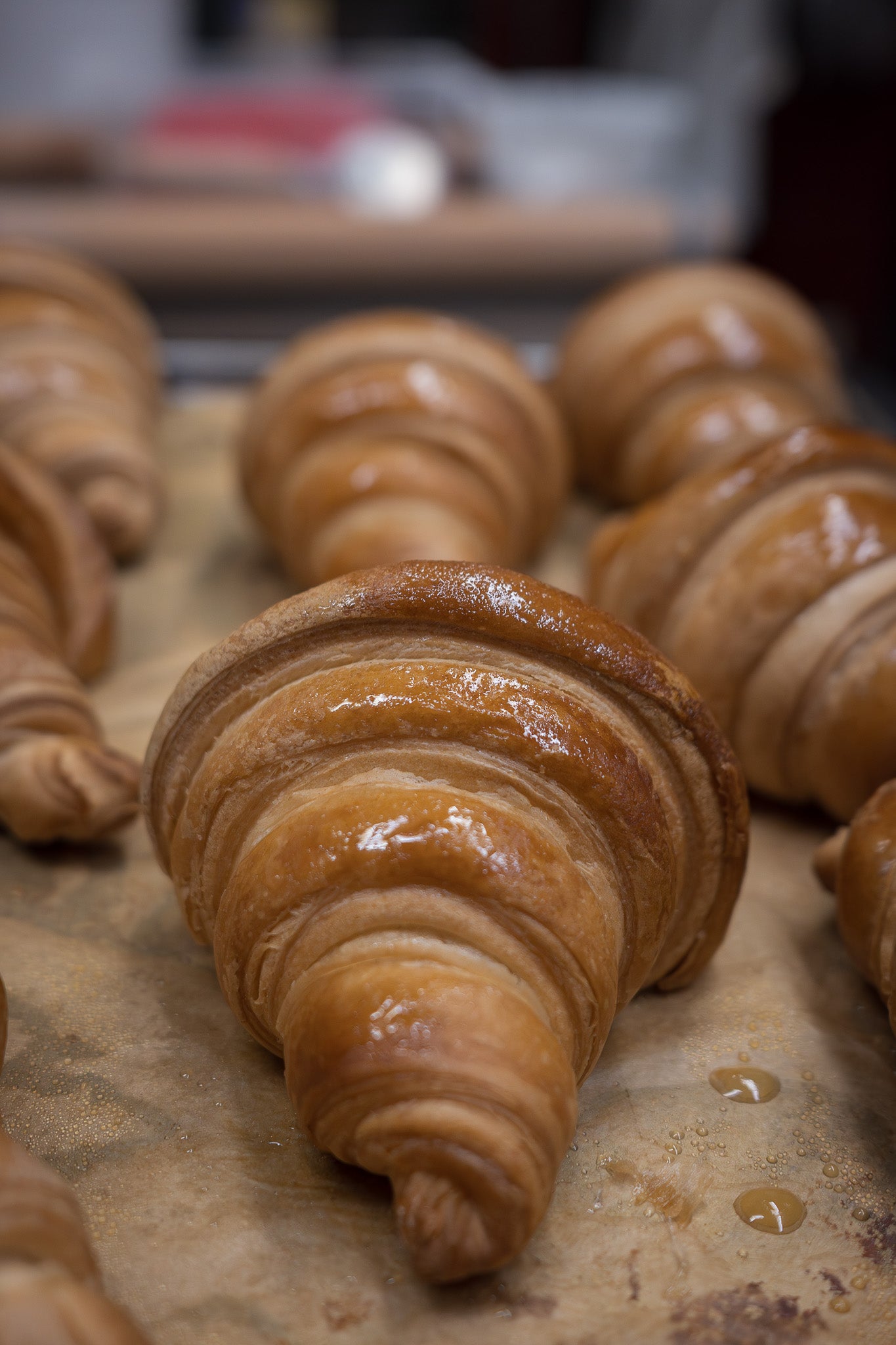
Avoid using eggs or milk to glaze the surface of the croissant, as they may compromise proper development during baking. If you want a shiny finish, you can use our “glazing sugar” or brush the croissant, while still hot from the oven, with a syrup made from water, sugar, and vanilla (or citrus zest or another flavor of your choice).
To enhance the flavor of the croissant, try brushing it while still hot from the oven with melted cocoa butter and sprinkle with sugar crystals.
Angel Mix is a concentrated powdered additive that's gluten-free, wheat-free, corn-free, and soy-free, and 100% vegan. It's used to prepare all types of sweet or savory gluten-free puff pastries - both with margarine and/or butter - and other gluten-free baked goods.
Can I make the recipe without Angel Mix?
For doughs like croissants, puff pastry, or bakery breads, the answer is no: omitting Angel Mix will completely compromise the final result, risking wasted time and ingredients.
For simpler doughs, it is possible to try replacing Angel Mix with another ingredient, but the outcome will never be the same.
With croissant dough or puff pastry, what else can I make?
Our recipes are intended as starting points, designed to help you develop your own customized solutions or to create a wide variety of other products.
With croissant dough, you can prepare Danish pastries, Pain au chocolat, sweet or savory filled pastries, and more. With puff pastry, you can make mini pizzas, cream horns, savory pies, vol-au-vent, and many other preparations.
What can I dust my work surface with to prevent the dough from sticking?
For laminated doughs, such as puff pastry, croissants, etc., it is IMPERATIVE to use rice starch, tapioca starch, or potato starch, in that order. Avoid using flour of any type or grain size, as it alters the composition of the dough, making it dry and creating micro-cracks on the surface.
For bread, pizza dough, etc., it is recommended to use any type of starch, but it is also possible to use very fine grain glutenfree flour.
In any case, it is recommended to use only the amount strictly necessary for the preparation and to remove the excess, especially when preparing puff pastry doughs.
Why don't you use cornstarch in recipes?
Because we want to offer an alternative to the usual ready-to-use industrial mixes, which are largely composed of corn starch.
Proposing recipes based on this same ingredient would be inconsistent with our vision.
Of course, those who prefer can substitute cornstarch for potato starch. It's a cheap and easy-to-find ingredient, but it tends to dry out the products more quickly.
Do I need a mixer?
Yes, while it's possible to prepare the dough by hand or with household appliances, it's highly recommended to use a mixer, even a non-professional one, as long as it's powerful enough to properly prepare the dough.
ANGEL MIX 3.0
€21,00
5.0
1 review1
total reviews
NEW!! New formulation!
Gluten-free Wheat-free Lactose & dairy-free Corn starch-free Xanthan gum free No added sugar or salt No preservatives, emulsifiers or colorants 100% Vegan
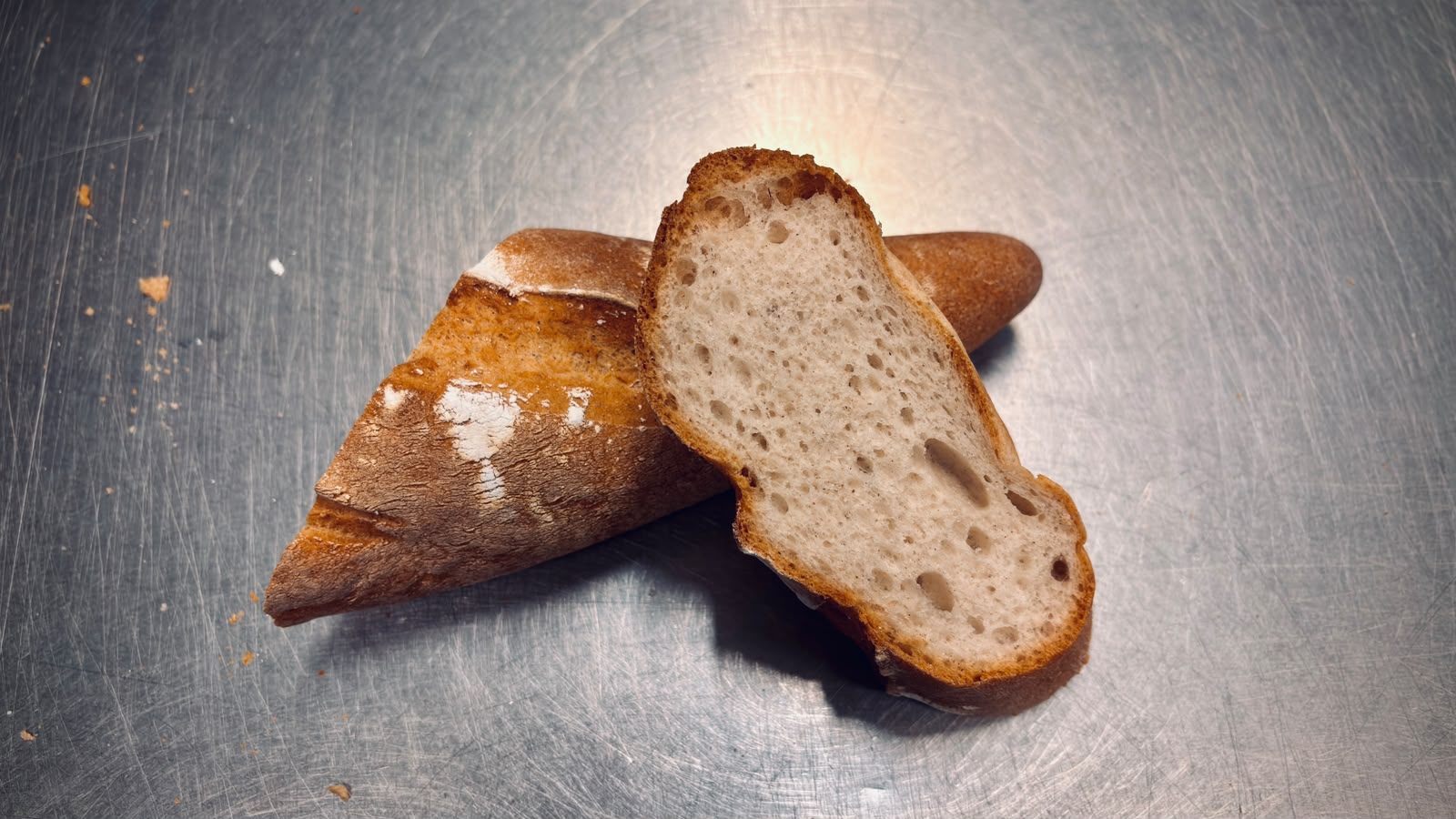
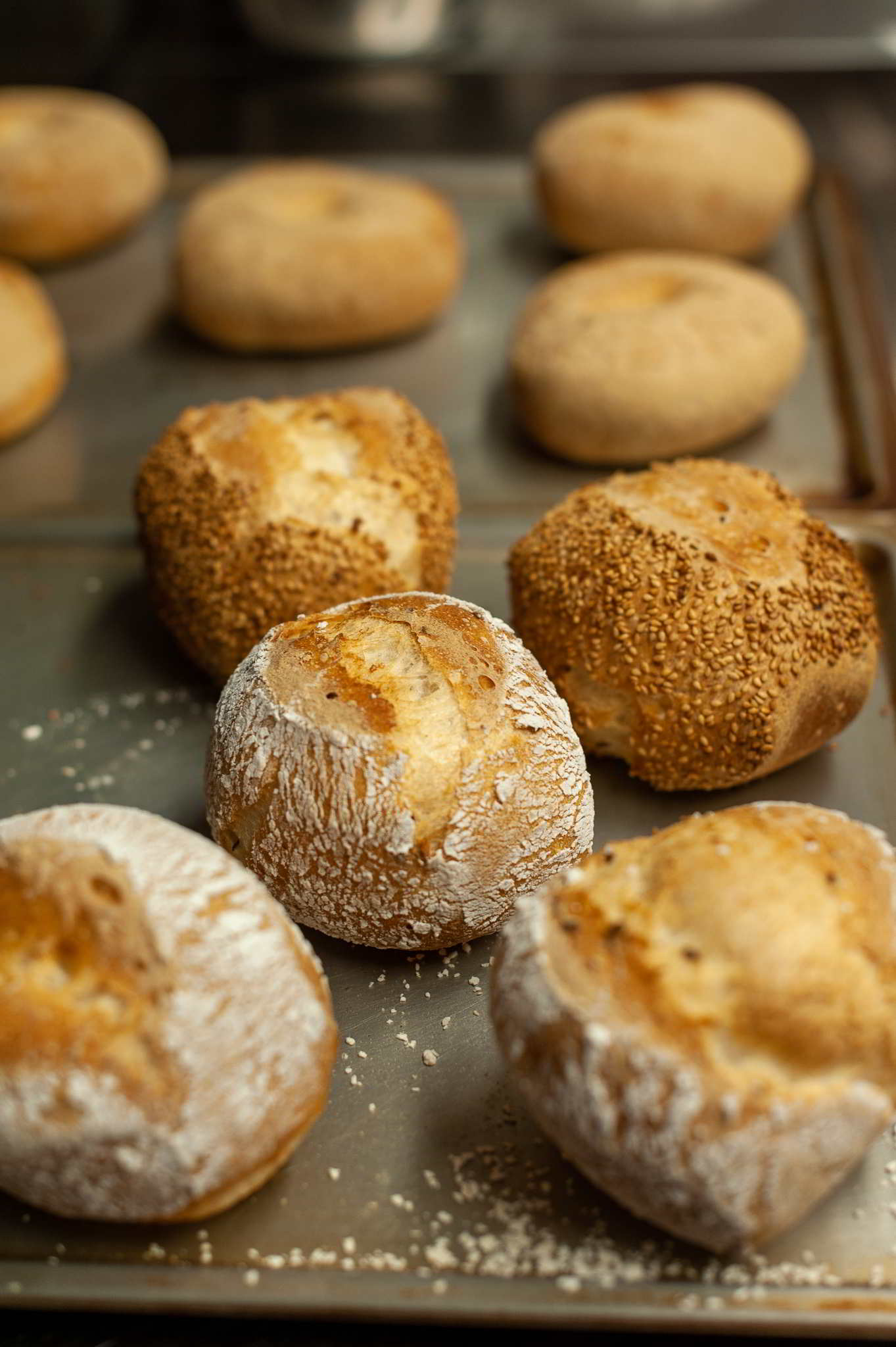
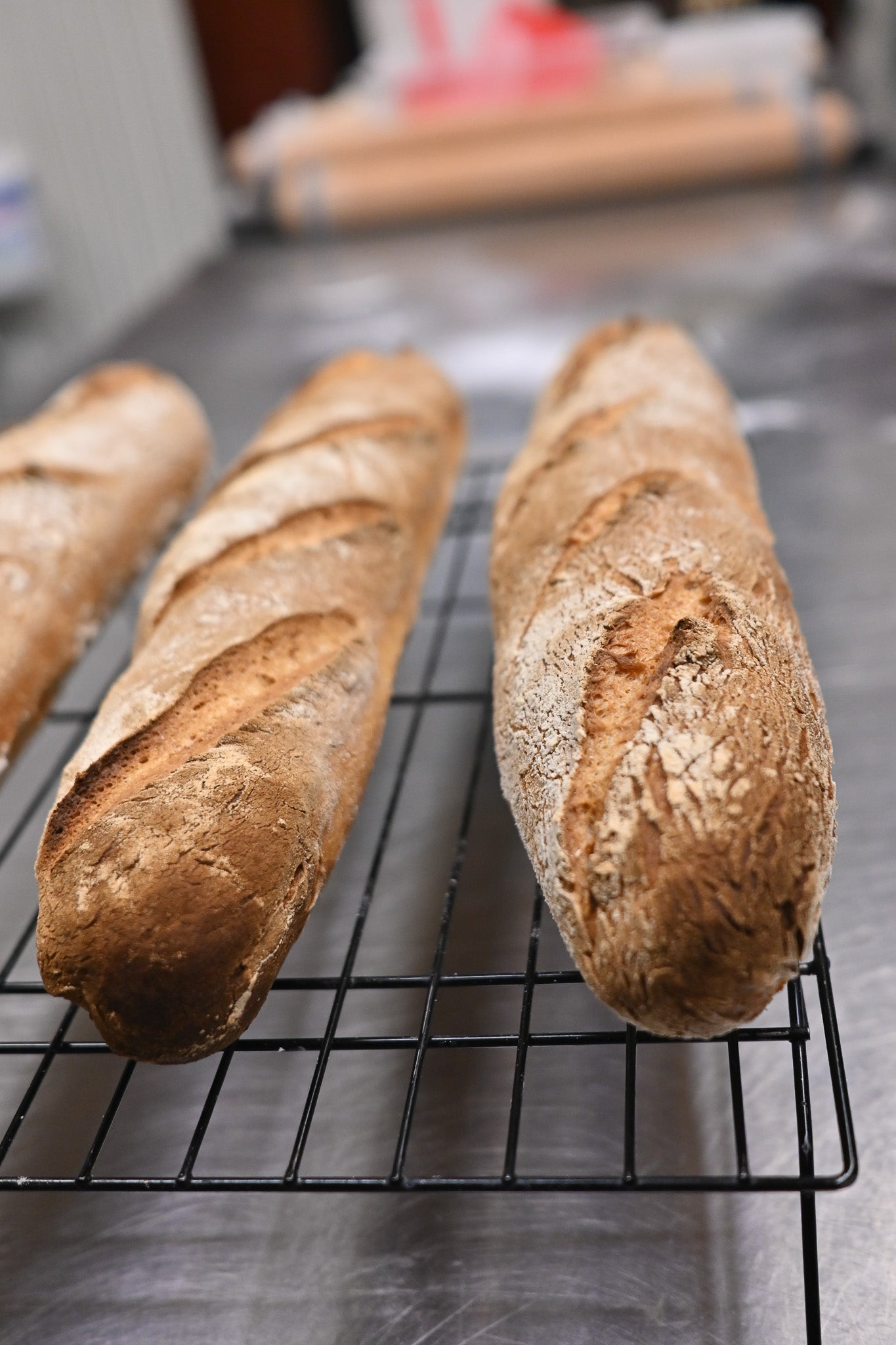
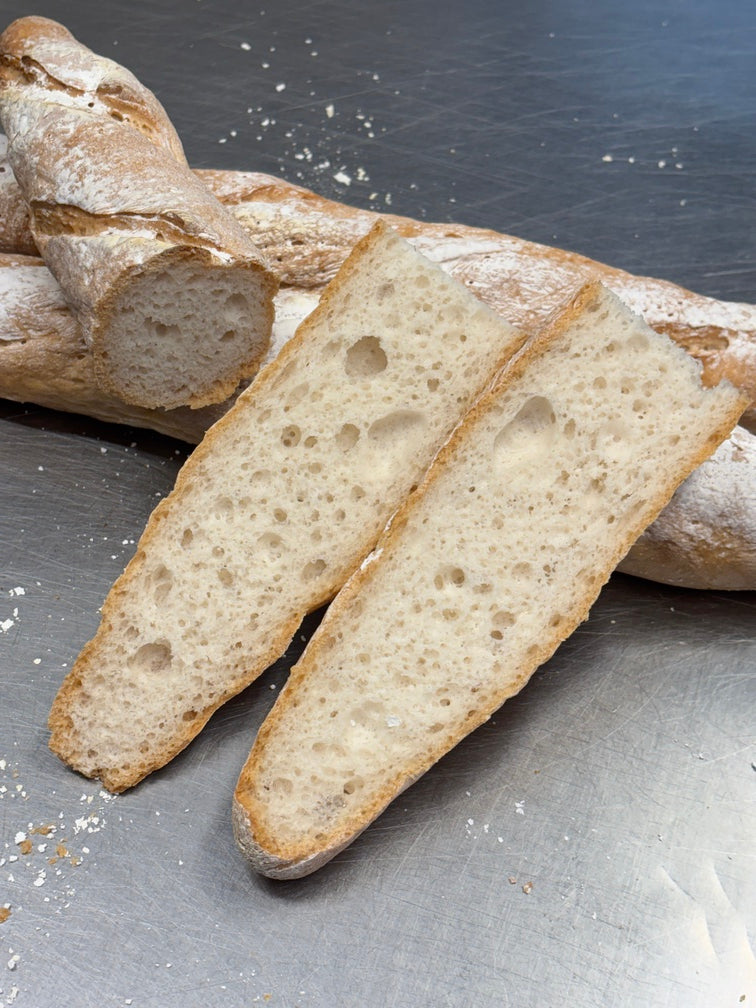
This recipe with Baker Mix is intended as a starting point for developing more complex preparations or those featuring different ingredient formulations. In this example, the final result is a baguette, but the true value of the recipe lies in...
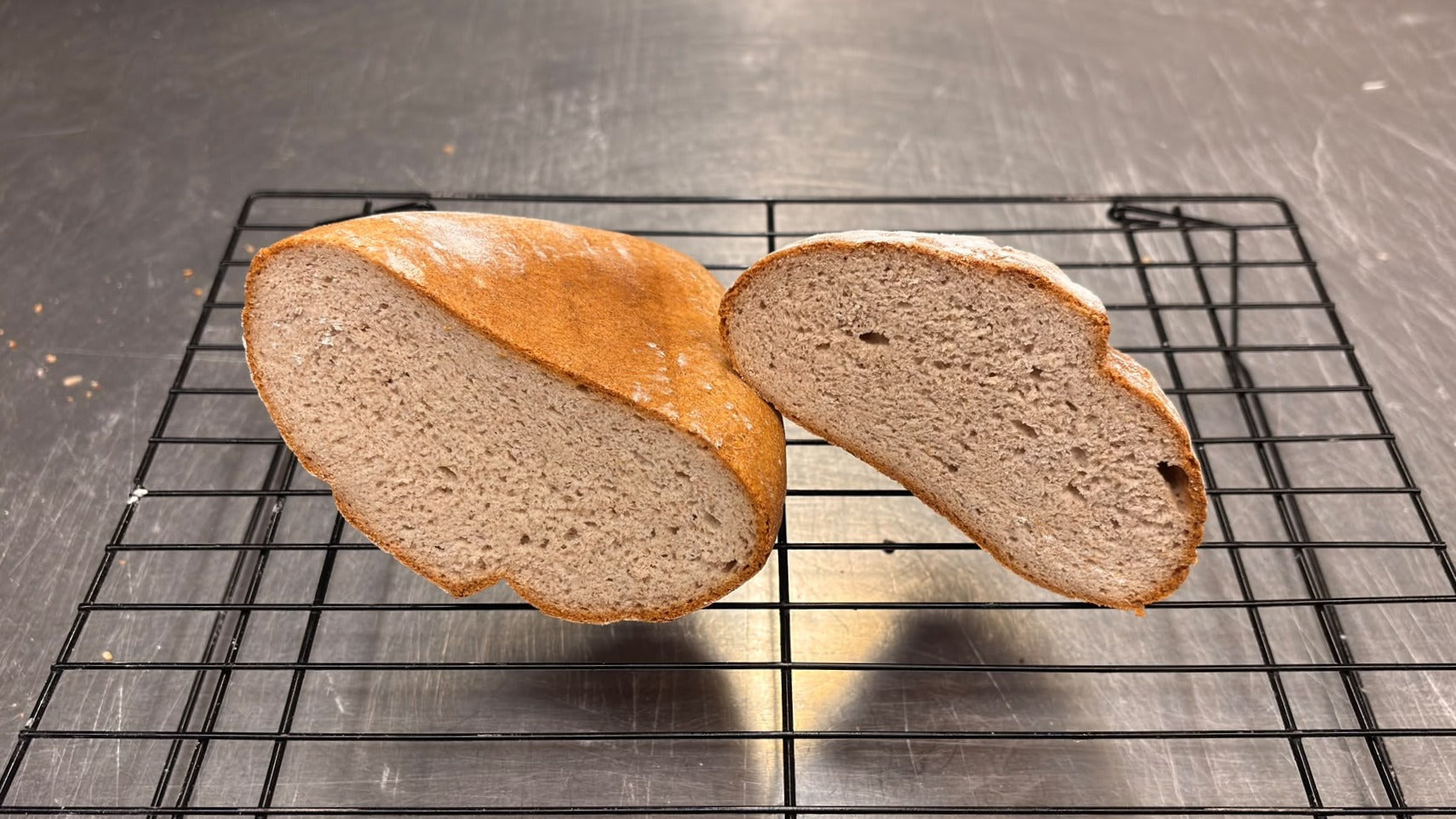
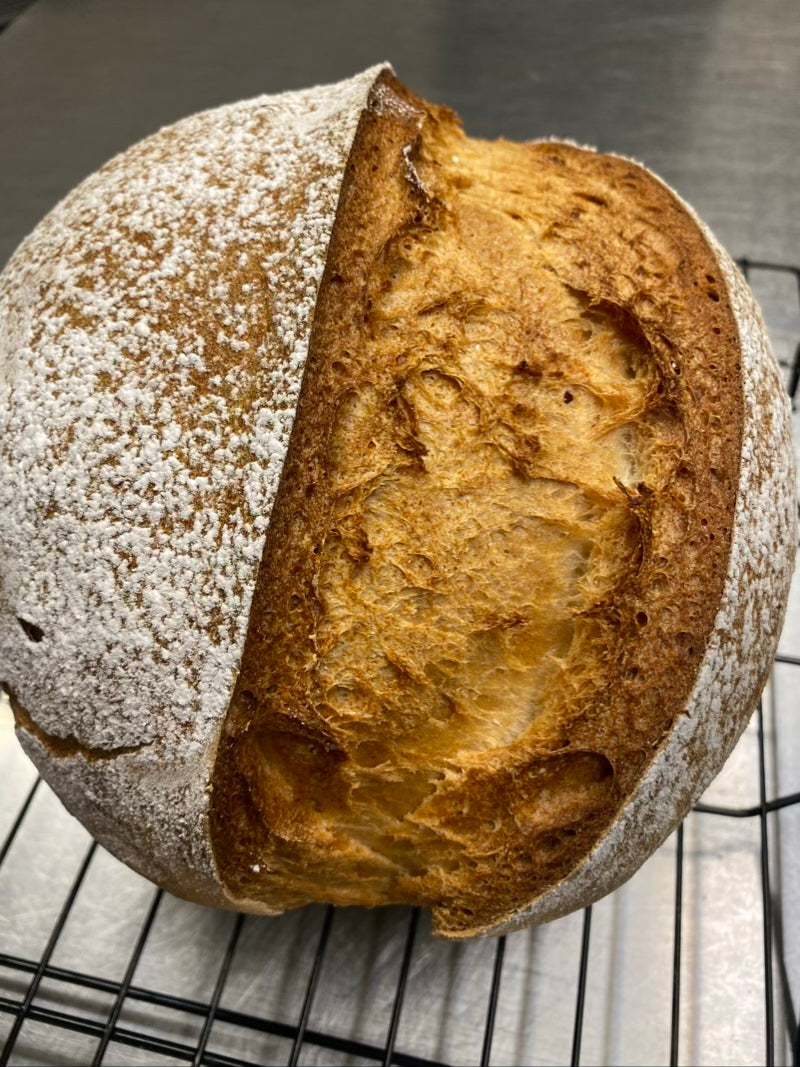
Who says you need starches to make great gluten-free bread? With Baker Mix, you can prepare a soft, fragrant loaf with an authentic taste using only flours. In a short time, you'll get gluten-free, wheat-free, corn-free, and 100% vegan bread,...
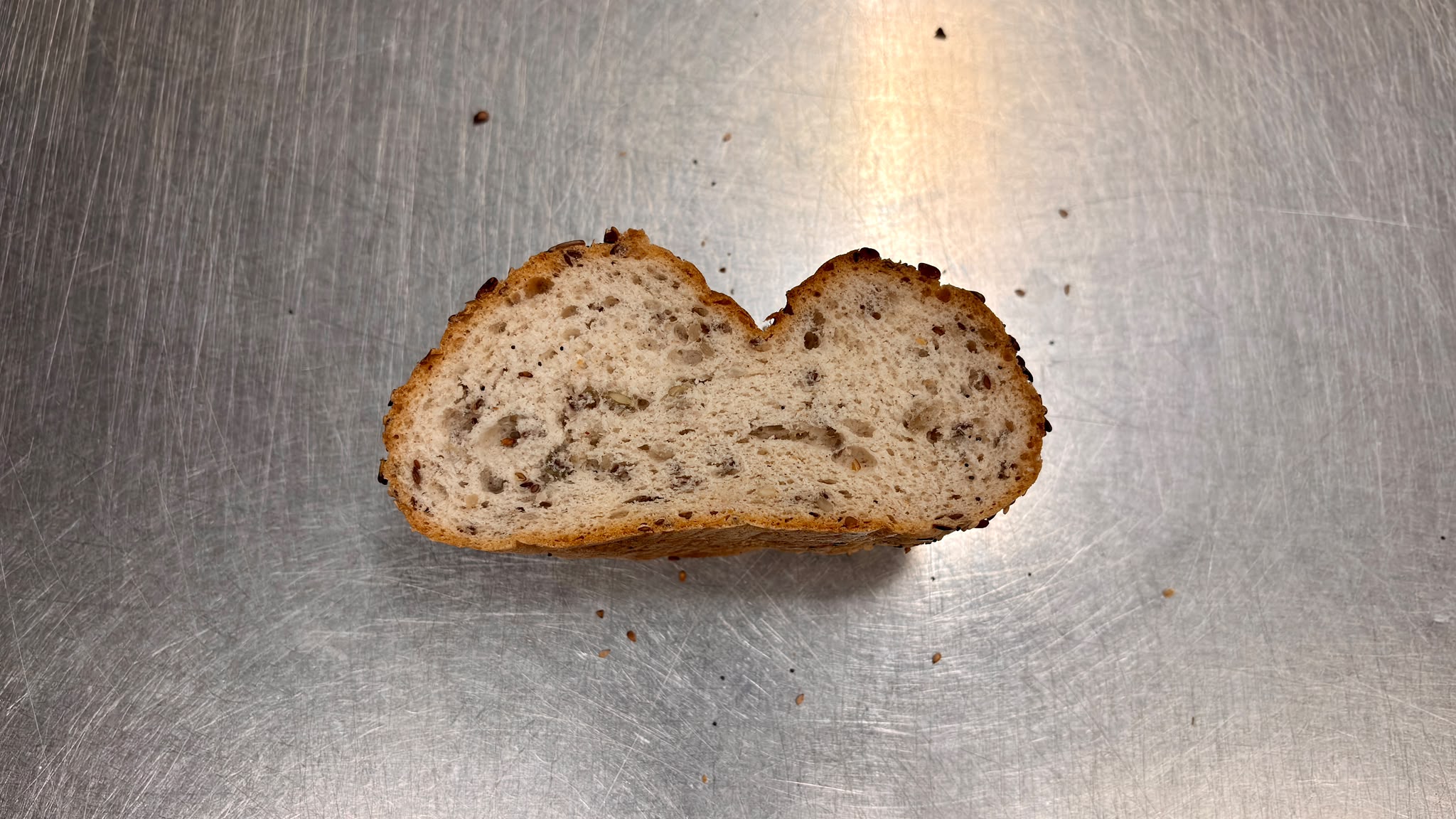
With Baker Mix, preparing a gluten-free bread that is rich in flavor and has a soft and fragrant texture is truly simple. This recipe allows you to quickly make a loaf with mixed seeds, prepared with a blend of sorghum,...




Share:
Soft and moist apple cake with rice flour and lemon zest
Croissant with margarine